Chlorpromazine
THORAZINE
Pronunciation: klor-PROE-ma-zeen
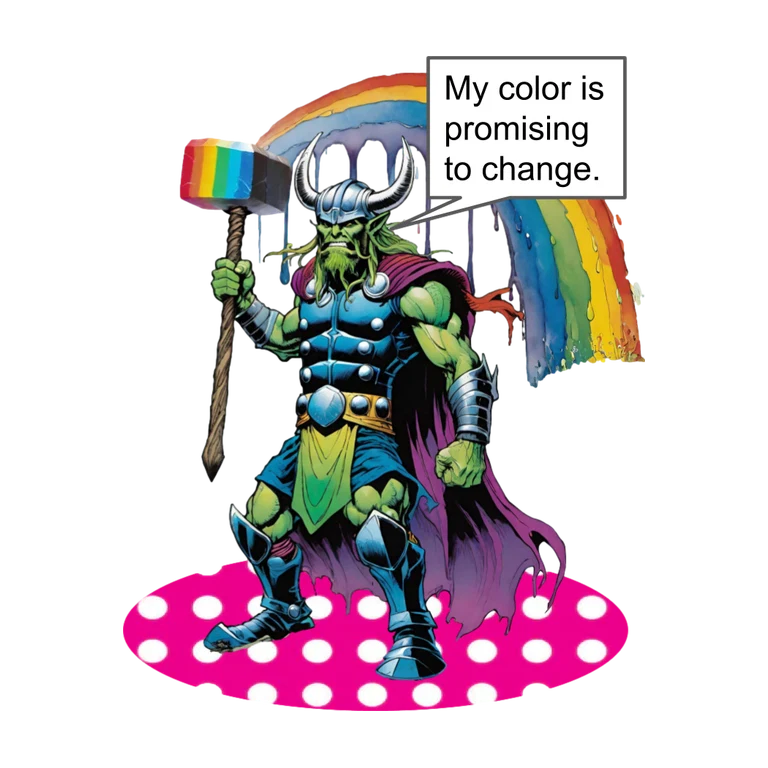
“Thor’s Color promising”
Photosensitive skin discoloration
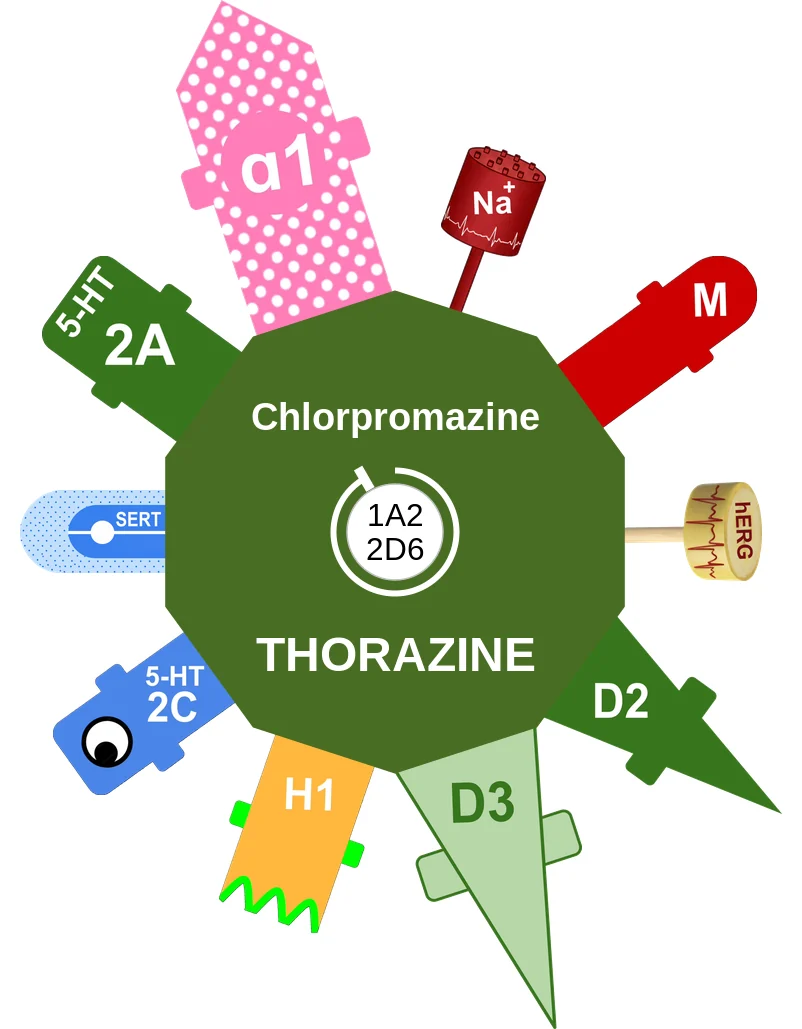
Polka dots on pink → α1 blocker → syncope if titrated too quickly (hit the floor)
Spooky mascot → antipsychotic
What it isLow-potency first-generation antipsychotic with broad D2, histamine, alpha-1, muscarinic, and serotonin blockade; schizophrenia.
Why this oneIt also treats intractable hiccups and severe nausea—an unusually broad clinical niche for an antipsychotic.
What limits itOrthostatic hypotension and anticholinergic burden exceed the extrapyramidal risk. Photosensitivity and corneal deposits emerge with long use.
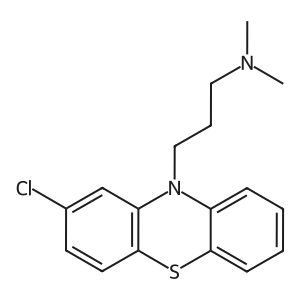
FDA-approved for
- schizophrenia (1954)
- nausea/vomiting (~1957)
Off-label
- migraine and headache in the emergency department
FDA label
Read the full label on DailyMed ↗
| FDA dosing | Population | Start | Target | Max |
|---|---|---|---|---|
| Psychotic disorders (schizophrenia/mania), outpatient | Adults | 10 mg TID–QID or 25 mg BID–TID | ~400 mg/day | 800 mg/day (higher not uncommon) |
| Psychotic disorders, hospitalized acute schizophrenic/manic | Adults | 25 mg TID | ~500 mg/day | 2000 mg/day (little gain >1000) |
| Nausea and vomiting | Adults | 10–25 mg q4–6h PRN | 10–25 mg q4–6h PRN | |
| Intractable hiccups | Adults | 25–50 mg TID–QID | 25–50 mg TID–QID | |
| Presurgical apprehension | Adults | 25–50 mg 2–3h pre-op | 25–50 mg 2–3h pre-op | |
| Acute intermittent porphyria | Adults | 25–50 mg TID–QID | 25–50 mg TID–QID | |
| Severe behavioral problems | Children 6 mo–12 yr | 0.25 mg/lb q4–6h PRN | 50–100 mg/day (older children up to 200 mg/day+) | 500 mg/day (retarded pts) |
| Nausea and vomiting | Children 6 mo–12 yr | 0.25 mg/lb q4–6h | 0.25 mg/lb q4–6h |
Titration Increase by 20–50 mg at semi-weekly intervals (more severe adult cases)
Renal Undefined
Hepatic Undefined
Instructions
- Increase dose gradually until symptoms controlled; more gradually in elderly/debilitated/emaciated
- After control, gradually reduce to lowest effective maintenance dose
- Acute states: often initiated with IM/IV, then substitute oral
- Not for pediatric patients <6 months except where potentially lifesaving
Available strengths
- tab 10, 25, 50, 100, 200 mg
Contraindications
- Comatose states or presence of large amounts of CNS depressants (alcohol, barbiturates, narcotics)
Cautions
- Neuroleptic malignant syndrome, tardive dyskinesia, extrapyramidal reactions
- Hypotension (esp. postural); caution in cardiovascular disease
- Cholestatic jaundice (usually 2nd–4th week; sensitivity reaction) — caution in liver disease
- Hematologic: agranulocytosis, leukopenia — watch weeks 4–10; report sore throat/infection
Adverse reactions
- Drowsiness (esp. first 1–2 weeks)
- Postural hypotension, tachycardia, dizziness, fainting
- Jaundice (cholestatic)
- Hematologic disorders: agranulocytosis, leukopenia, hemolytic/aplastic anemia, thrombocytopenic purpura
Pregnancy Undefined
Lactation Undefined
Cost
Generic entry1982
⚠ BOXED WARNING
- Increased mortality in elderly patients with dementia-related psychosis
Classes and tags
Clinical profile
Legacy pregnancy categoryC
Defining liabilityMetabolic effects, extrapyramidal symptoms/tardive dyskinesia and agent-specific QT or orthostatic risk.
Serotonicity
This drug is routinely called serotonergic. By Gillman’s human-effect criteria it does not raise serotonin in the synapse.
No established clinically meaningful SRI or MAO-A mechanism; receptor antagonism should not be mislabeled as serotonin toxicity.
It binds the serotonin transporter, and its SERT peg is drawn to that textbook affinity. The pale halo around the peg marks binding that, by Gillman’s human-effect criteria, does not produce clinical serotonin reuptake inhibition.
Gillman’s four human testsA measurable SERT affinity that fails all four is not clinical serotonicity.
- Retarded orgasm
- Efficacy in OCD and cataplexy
- Clonus and hyperreflexia in single-drug overdose
- Serotonin toxicity when combined with an MAOI
Non-elevating actionSerotonin-receptor antagonism may be present; degree varies
Evidence confidenceModerate
Background: what serotonicity is · what is and is not an SRI · what counts as a relevant MAOI.
Open Chlorpromazine in the interactive console ↗
Memory aids: interaction avatars