Alosetron
LOTRONEX
Pronunciation: al-OE-se-tron (LOE-tro-nex)
“Low Tronic is a loose Tronic”
approved for severely loose stools ( diarrhea-predominant IBS) in women
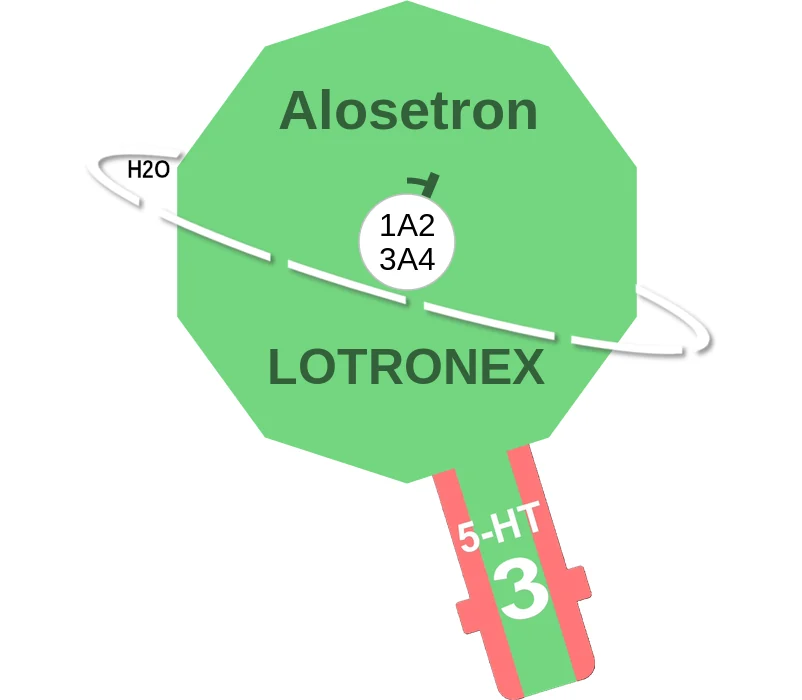
5-HT3 antagonist color theme (ondansetron, alosetron)
What it is5-HT3 antagonist; severe diarrhea-predominant IBS in women.
Why this oneIt can reduce pain, urgency, and stool frequency after conventional treatment has failed.
What limits itIschemic colitis and dangerous constipation complications restrict prescribing and require immediate discontinuation for warning symptoms.
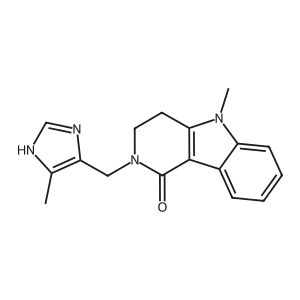
FDA-approved for
- IBS-D in women (2000)
FDA label
Read the full label on DailyMed ↗
| FDA dosing | Population | Start | Target | Max |
|---|---|---|---|---|
| Severe diarrhea-predominant IBS (refractory) | Adult women | 0.5 mg BID | 0.5 mg QD–BID | 1 mg BID |
Titration May increase to 1 mg BID after 4 weeks if well tolerated but inadequate control.
Renal No adjustment needed
Hepatic Contraindicated in severe impairment; use with caution in mild–moderate.
Instructions
- Take with or without food.
- Discontinue immediately if constipation or signs of ischemic colitis (rectal bleeding, bloody diarrhea, new/worsening abdominal pain); do not resume if ischemic colitis occurs.
- If constipated, stop until it resolves; may restart at 0.5 mg QD.
Available strengths
- tab 0.5, 1 mg
Contraindications
- Constipation (do not initiate)
- History of chronic/severe constipation or its sequelae; intestinal obstruction, stricture, toxic megacolon, GI perforation/adhesions; ischemic colitis; impaired intestinal circulation, thrombophlebitis, or hypercoagulable state; Crohn's disease or ulcerative colitis; diverticulitis
- Severe hepatic impairment
- Concomitant fluvoxamine
Cautions
- Serious complications of constipation (obstruction, ileus, impaction, toxic megacolon, bowel ischemia; rarely perforation/death); higher risk in elderly, debilitated, or on GI-motility-lowering drugs
- Ischemic colitis—evaluate promptly; do not resume treatment
Adverse reactions
- Constipation (dose-related, ~29% at 1 mg BID)
- Abdominal discomfort/pain
- Nausea
- GI discomfort/pain
Pregnancy Insufficient human data; no adverse developmental effects in animal studies.
Lactation No human data; present in rat milk—monitor breastfed infant for severe constipation and blood in stools.
Cost
Generic entry2015
⚠ BOXED WARNING
- Ischemic colitis and serious complications of constipation
Classes and tags
Clinical profile
Legacy pregnancy categoryUnknown / historical label unavailable
Defining liabilityGenerally tolerated at therapeutic doses; clinically important risks are agent-specific and increase with interactions or organ impairment.
Serotonicity
This drug is routinely called serotonergic. By Gillman’s human-effect criteria it does not raise serotonin in the synapse.
No clinically meaningful serotonin-elevating mechanism identified in this first-pass Gillman-based review.
Gillman’s four human testsA measurable SERT affinity that fails all four is not clinical serotonicity.
- Retarded orgasm
- Efficacy in OCD and cataplexy
- Clonus and hyperreflexia in single-drug overdose
- Serotonin toxicity when combined with an MAOI
Non-elevating actionNone recorded
Evidence confidenceModerate
Background: what serotonicity is · what is and is not an SRI · what counts as a relevant MAOI.
Open Alosetron in the interactive console ↗
Memory aids: interaction avatars