Quetiapine XR
SEROQUEL XR
Pronunciation: kwe-TYE-a-peen (SER-oe-kwel)
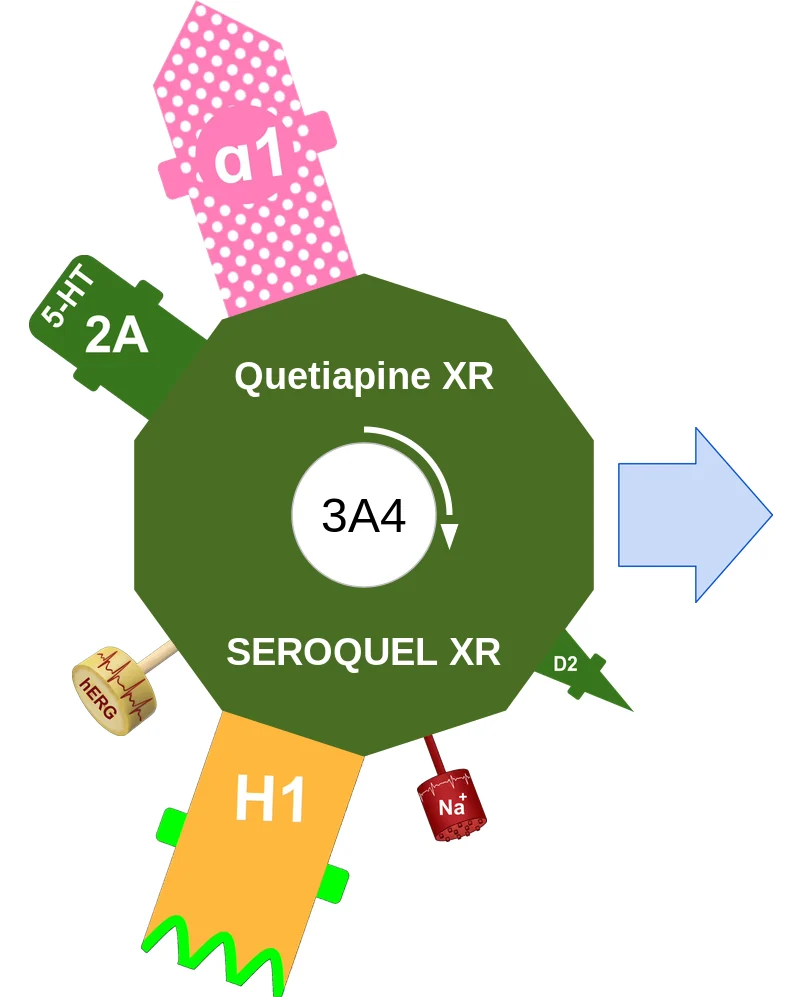

“Sera, Quit typing!”
Spooky mascot → antipsychotic
Crown → antihistamine
Polka dots on pink → α1 blocker → syncope if titrated too quickly (hit the floor)
QT prolongation
For mania (typing all night)
What it isExtended-release D2 and 5-HT2A antagonist with strong H1 and alpha-1 blockade; schizophrenia and adjunctive depression.
Why this oneIt offers once-daily evening dosing; the XR label carries the MDD-adjunct indication (2009).
What limits itTake without food or with a light meal (<300 kcal). Sedation, orthostasis, and metabolic disease limit use; strong CYP3A4 modifiers alter exposure.
FDA-approved for
- schizophrenia (2007)
- depression (adjunct) (2009)
FDA label
Read the full label on DailyMed ↗
| FDA dosing | Population | Start | Target | Max |
|---|---|---|---|---|
| Schizophrenia | Adults | 300 mg/day (Day 1) | 400-800 mg/day | 800 mg/day |
| Schizophrenia | Adolescents 13-17 y | 50 mg/day, titrate 100/200/300/400 over Days 2-5 | 400-800 mg/day | 800 mg/day |
| Bipolar I disorder, manic or mixed (monotherapy or adjunct to lithium/divalproex) | Adults | 300 mg/day Day 1, 600 mg/day Day 2 | 400-800 mg/day | 800 mg/day |
| Bipolar I disorder, manic (acute monotherapy) | Children/adolescents 10-17 y | 50 mg/day, titrate 100/200/300/400 over Days 2-5 | 400-600 mg/day | 600 mg/day |
| Bipolar disorder, depressive episodes | Adults | 50 mg/day, titrate 100/200/300 over Days 2-4 | 300 mg/day | 300 mg/day |
| Bipolar I disorder maintenance (adjunct to lithium/divalproex) | Adults | Continue effective dose | 400-800 mg/day | 800 mg/day |
| Major depressive disorder (adjunct to antidepressants) | Adults | 50 mg/day Days 1-2, 150 mg/day Day 3 | 150-300 mg/day | 300 mg/day |
Titration Schizophrenia (adults): dose increases at intervals as short as 1 day (increments up to 300 mg/day)
Renal Undefined (clinical experience limited)
Hepatic Start 50 mg/day, increase in 50 mg/day increments (higher plasma levels expected)
When restarting after >1 week off, follow initial dosing schedule
Instructions
- Swallow whole; do not split, chew, or crush
- Take without food or with a light meal (~300 calories)
- Administer once daily, preferably in the evening
- Reduce dose to one-sixth with strong CYP3A4 inhibitors; increase up to 5-fold with chronic strong CYP3A4 inducers
- Elderly: start 50 mg/day with slower titration
Available strengths
- ER tab 50, 150, 200, 300, 400 mg
- tab 25, 50, 100, 150, 200, 300, 400 mg
Cautions
- Cerebrovascular adverse reactions in elderly with dementia-related psychosis
- Neuroleptic malignant syndrome
- Metabolic changes (hyperglycemia/diabetes, dyslipidemia, weight gain)
- Tardive dyskinesia
- Orthostatic hypotension
- Increased blood pressure in children and adolescents
- Leukopenia, neutropenia, agranulocytosis
- Cataracts (lens changes)
- Anticholinergic (antimuscarinic) effects
Adverse reactions
- Somnolence
- Dry mouth
- Dizziness
- Constipation
- Dyspepsia
- Weight gain
- Increased appetite
- Fatigue
Pregnancy Third-trimester exposure risks extrapyramidal and/or withdrawal symptoms in neonates; epidemiologic data have not established increased risk of major birth defects
Lactation Present in human milk (relative infant dose <1%); consider benefits vs risk
Cost
⚠ BOXED WARNING
- Increased mortality in elderly patients with dementia-related psychosis
Classes and tags
Clinical profile
Legacy pregnancy categoryC
Defining liabilityMetabolic effects, extrapyramidal symptoms/tardive dyskinesia and agent-specific QT or orthostatic risk.
Active metabolites
Open Quetiapine XR in the interactive console ↗
Memory aids: interaction avatars