Zidovudine
RETROVIR
Pronunciation: zye-DOE-vyoo-deen
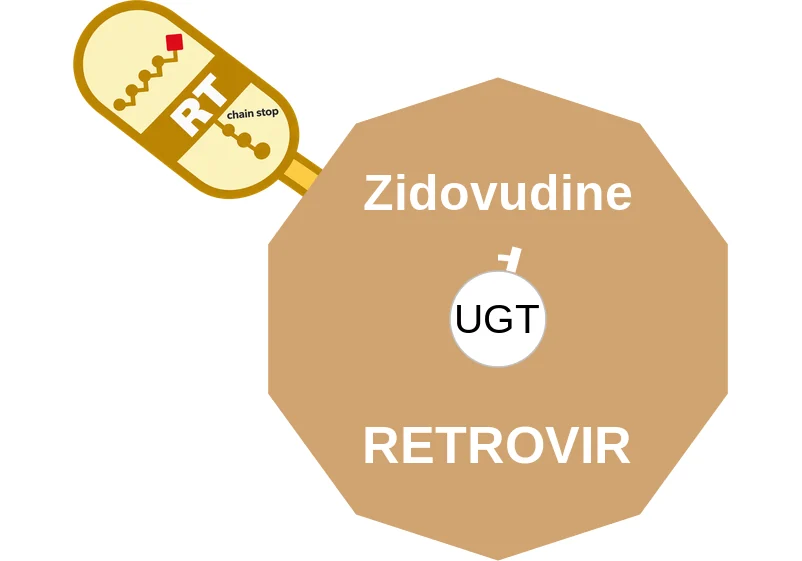
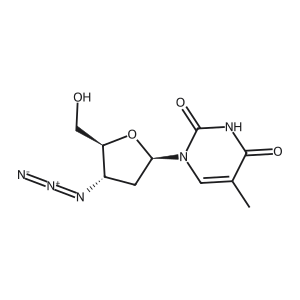
What it isZidovudine (AZT) is a nucleoside reverse transcriptase inhibitor (NRTI) that, once phosphorylated, inhibits HIV reverse transcriptase and terminates viral DNA chain elongation.
Why this oneA cornerstone of early combination antiretroviral therapy, it is still used within regimens and notably for prevention of mother-to-child HIV transmission.
What limits itIt carries a boxed warning for hematologic toxicity, symptomatic myopathy, and lactic acidosis with severe hepatomegaly.
FDA label
Read the full label on DailyMed ↗
| FDA dosing | Population | Start | Target | Max |
|---|---|---|---|---|
| HIV-1 infection (in combination with other antiretrovirals) | Adults | 300 mg BID | 300 mg BID | 300 mg BID |
| HIV-1 infection | Peds 4 wk to <18 y, 4 to <9 kg | 12 mg/kg BID or 8 mg/kg TID | 24 mg/kg/day | Do not exceed adult dose |
| HIV-1 infection | Peds >=9 to <30 kg | 9 mg/kg BID or 6 mg/kg TID | 18 mg/kg/day | Do not exceed adult dose |
| HIV-1 infection | Peds >=30 kg | 300 mg BID or 200 mg TID | 600 mg/day | 600 mg/day |
| Prevention of maternal-fetal HIV-1 transmission — maternal | Pregnant women >14 wk gestation | 100 mg PO 5x/day until labor; then IV 2 mg/kg over 1 h, then 1 mg/kg/h until cord clamping | Through delivery | 100 mg 5x/day PO |
| Prevention of maternal-fetal HIV-1 transmission — neonatal | Neonates (start within 12 h of birth, through 6 wk of age) | 2 mg/kg PO q6h (8 mg/kg/day); IV if unable to take oral: 1.5 mg/kg over 30 min q6h | Continue through 6 weeks of age | 8 mg/kg/day PO |
Renal CrCl <15 mL/min or hemodialysis/peritoneal dialysis: 100 mg q6-8h
Hepatic Insufficient data to recommend dose adjustment; concentrations increased in hepatic impairment — monitor hematologic toxicities frequently
Instructions
- Alternative pediatric dosing by BSA: 480 mg/m2/day divided (240 mg/m2 BID or 160 mg/m2 TID)
- Assess children for ability to swallow tablets; use syrup if not, and for accurate neonatal dosing (0.1-mL graduated syringe)
- Interrupt dosing for significant anemia (Hgb <7.5 g/dL or >25% drop) or neutropenia (granulocytes <750/mm3 or >50% drop) until marrow recovery; epoetin alfa may support resumption
Available strengths
- cap 100 mg
- tab 300 mg
- sol 50 mg/5 mL
- inj 10 mg/mL
Cautions
- Use with caution if bone marrow compromise (granulocytes <1,000/mm3 or Hgb <9.5 g/dL); frequent blood counts in advanced disease, periodic counts otherwise
- Myopathy and myositis with prolonged use
- Lactic acidosis/severe hepatomegaly with steatosis — suspend if suspected; female sex and obesity are risk factors
- Avoid coadministration with ribavirin (exacerbation of anemia); hepatic decompensation (some fatal) in HIV/HCV co-infected patients on interferon alfa +/- ribavirin
- Immune reconstitution syndrome
- Lipoatrophy (face, limbs, buttocks) related to cumulative exposure; only partially reversible — assess regularly and consider switching
Adverse reactions
- Headache (63%), malaise (53%), nausea (51%), anorexia (20%), vomiting (17%)
- Anemia and neutropenia (most significant in advanced disease); pancytopenia (reversible in most)
- Also >=5%: abdominal cramps/pain, arthralgia, chills, dyspepsia, fatigue, insomnia, musculoskeletal pain, myalgia, neuropathy
- Postmarketing: aplastic anemia, pure red cell aplasia, cardiomyopathy, hepatitis, lactic acidosis, pancreatitis, rhabdomyolysis, seizures, Stevens-Johnson syndrome/TEN, skin and nail pigmentation, gynecomastia
Pregnancy APR registry (>13,000 exposures): no increase in overall birth defects vs 2.7% background; maternal-fetal HIV-1 transmission reduced 24.9% to 7.8% in ACTG trial; transient hyperlactatemia reported in exposed infants
Lactation Do not breastfeed (CDC: HIV-1-infected mothers should not breastfeed; zidovudine present in human milk; transmission, viral resistance, and infant adverse-reaction risks)
Cost
Generic entry2005
⚠ BOXED WARNINGS
- Hematologic toxicity (neutropenia/anemia)
- Symptomatic myopathy
- Lactic acidosis and severe hepatomegaly with steatosis
Principal riskBoxed warning: hematologic toxicity (neutropenia/anemia), symptomatic myopathy, and lactic acidosis with severe hepatomegaly.
Classes and tags
Clinical profile
Legacy pregnancy categoryUnknown / historical label unavailable
Defining liabilityAgent-specific renal, hepatic, hematologic, metabolic and drug-interaction toxicity.