Trihexyphenidyl
ARTANE
Pronunciation: trye-hex-ee-FEN-i-dil
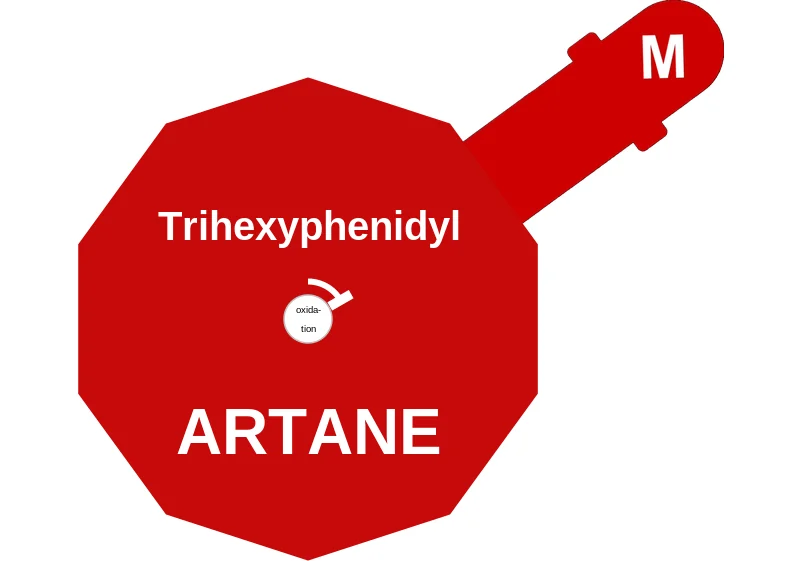

“Triangle-hexagon Art thing”
“mad as a hatter” → BBB-crossing antimuscarinic
What it isCentral antimuscarinic; drug-induced parkinsonism, dystonia and tremor.
Why this oneIt is effective for dystonia, including the primary dystonias, where few oral agents work.
What limits itAnticholinergic burden and cognitive impairment, so it is poor in the elderly. It does not help tardive dyskinesia and can worsen it.
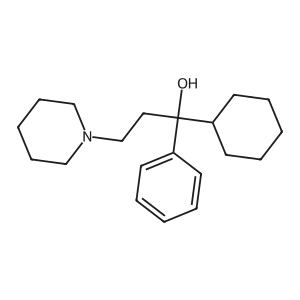
FDA-approved for
- Parkinson disease / drug-induced EPS (1949)
Off-label
- primary dystonia
FDA label
Read the full label on DailyMed ↗
| FDA dosing | Population | Start | Target | Max |
|---|---|---|---|---|
| Parkinsonism, all forms (adjunct; idiopathic regimen) | Adult | 1 mg on day 1 | 6–10 mg/day divided TID with meals | 12–15 mg/day (chiefly postencephalitic) |
| Parkinsonism — adjunct to levodopa | Adult | Reduce usual dose of each drug | 3–6 mg/day in divided doses | Undefined |
| Drug-induced extrapyramidal disorders (phenothiazines, thioxanthenes, butyrophenones, dibenzoxazepines) | Adult | 1 mg single dose | 5–15 mg/day (some controlled on 1 mg/day) | 15 mg/day (top of usual range) |
Titration Idiopathic parkinsonism: ↑2 mg every 3–5 days; drug-induced EPS: ↑ progressively if not controlled within a few hours
Renal Undefined
Hepatic Undefined
Instructions
- Divide daily dose TID at mealtimes; >10 mg/day may be split QID (3 with meals + 1 at bedtime)
- Take before or after meals per response (before if excessive dry mouth unless nausea; after if sialorrhea)
- Start low and increase gradually, especially age >60
- Avoid abrupt withdrawal (parkinsonism exacerbation, NMS) — reduce gradually
Available strengths
- tab 2, 5 mg
- sol 2 mg/5 mL
Contraindications
- Narrow-angle glaucoma (blindness reported with long-term use)
Cautions
- Angle-closure glaucoma — gonioscopy before starting; monitor IOP
- Hot weather/anhidrosis — fatal hyperthermia (esp. with other atropine-like drugs, chronic illness, alcoholism, CNS disease, manual labor in heat)
- Neuroleptic malignant syndrome with dose reduction or discontinuation
Adverse reactions
- Dry mouth (30–50% minor effects)
- Blurred vision
- Dizziness
- Mild nausea
- Nervousness
- Confusion/memory impairment
- Constipation
- Drowsiness
- Urinary hesitancy/retention
- Tachycardia
- Mydriasis/increased IOP
Pregnancy Pregnancy Category C; no animal or human data — use only if clearly needed.
Lactation Unknown if excreted in milk; may suppress lactation — use only if benefit outweighs infant risk.
Cost
Generic entry1982
NO BOXED WARNINGS
Principal riskAnticholinergic burden and cognitive impairment
Classes and tags
Clinical profile
Legacy pregnancy categoryC
Defining liabilityGenerally tolerated at therapeutic doses; clinically important risks are agent-specific and increase with interactions or organ impairment.
Open Trihexyphenidyl in the interactive console ↗
Memory aids: interaction avatars