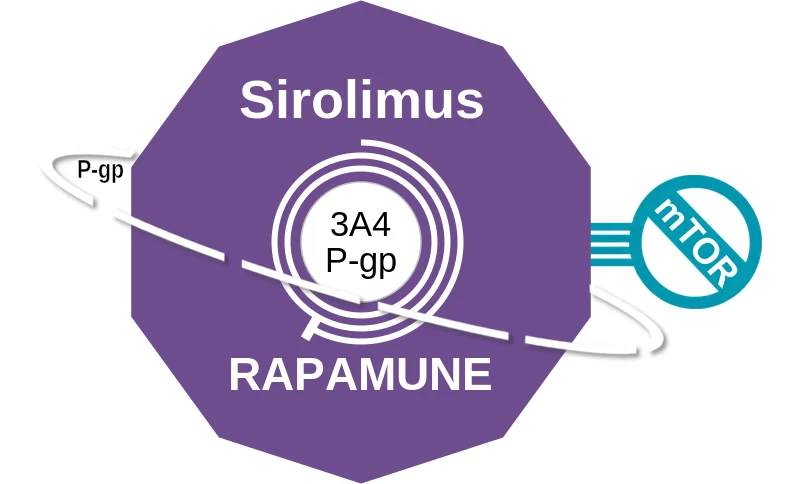
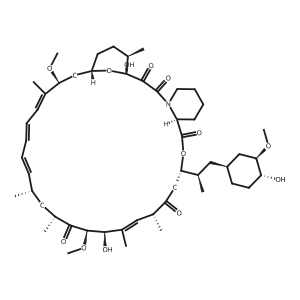
Sirolimus
RAPAMUNE
Pronunciation: sir-OE-li-mus
“Wrap a mice in Zero limas”
studied as an anti-aging therapy
What it ismTOR inhibitor; transplant, lymphangioleiomyomatosis and vascular anomalies.
Why it mattersIts anti-lymphangiogenic effect makes it disease-modifying therapy for lymphangioleiomyomatosis, a role everolimus does not share.
What it changesImpaired wound healing, so it is avoided immediately post-transplant. Hyperlipidemia, pneumonitis and mouth ulcers.
FDA-approved for
- transplant immunosuppression (1999)
FDA label
Read the full label on DailyMed ↗
| FDA dosing | Population | Start | Target | Max |
|---|---|---|---|---|
| Renal transplant rejection prophylaxis (low–moderate immunologic risk) | Adults | 6 mg loading dose day 1, then 2 mg QD | Adjust to trough concentration | 40 mg/day |
| Renal transplant rejection prophylaxis (high immunologic risk) | Adults | Up to 15 mg loading dose day 1, then 5 mg QD | Adjust to trough concentration | 40 mg/day |
| Lymphangioleiomyomatosis (LAM) | Adults | 2 mg QD | Trough 5–15 ng/mL | 40 mg/day |
Titration Continue new maintenance dose for at least 7–14 days before further dose adjustment (long half-life)
Renal Undefined
Hepatic Reduce maintenance dose in hepatic impairment
Maximum dose on any day should not exceed 40 mg
Instructions
- Take orally once daily, consistently with or without food
- Do not crush, chew, or split tablets; patients unable to take tablets should use the oral solution
- Take 4 hours after cyclosporine (renal transplant)
- Therapeutic drug monitoring recommended for all patients
Available strengths
- tab 0.5, 1, 2 mg
- sol 1 mg/mL
- gel 0.2 %
- inj 5 mg/mL
Cautions
- Increased susceptibility to infection and possible lymphoma/malignancy
- Hypersensitivity reactions and angioedema
- Fluid accumulation and impaired wound healing
- Hyperlipidemia
- Decline in renal function with long-term cyclosporine combination
- Proteinuria
- Interstitial lung disease / non-infectious pneumonitis
- Embryo-fetal toxicity
- Not recommended in liver or lung transplant
Adverse reactions
- Peripheral edema
- Hypertriglyceridemia
- Hypertension
- Hypercholesterolemia
- Increased creatinine
- Abdominal pain
- Diarrhea
- Headache
- Fever
- Urinary tract infection
- Anemia
- Nausea
- Arthralgia
- Thrombocytopenia
Pregnancy Can cause fetal harm; use highly effective contraception during treatment and for 12 weeks after final dose
Lactation Breastfeeding not recommended (potential for serious adverse effects in breastfed infants based on mechanism of action)
Cost
Generic entry2014
⚠ BOXED WARNINGS
- Immunosuppression, infection and lymphoma
- Not recommended in liver or lung transplantation
Classes and tags
Clinical profile
Legacy pregnancy categoryD
Defining liabilityMyelosuppression, dyslipidemia, impaired healing, pneumonitis and interaction burden.
Open Sirolimus in the interactive console ↗