Procaine
NOVOCAINE
What it isEster local anesthetic; infiltration anesthesia.
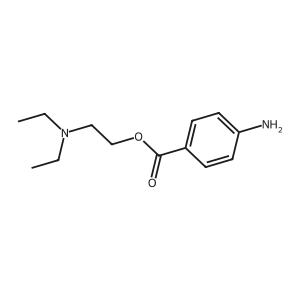
Why this oneThe original synthetic local anesthetic, hydrolyzed by plasma esterases rather than the liver.
What limits itIts PABA metabolite causes true allergy far more often than the amides — the reason for the ester-versus-amide distinction.
FDA-approved for
- local anesthesia (1938)
FDA label
Read the full label on DailyMed ↗
| FDA dosing | Population | Start | Target | Max |
|---|---|---|---|---|
| Infiltration anesthesia | Adult | 0.25%-0.5% solution (dilute 1% with 0.9% NaCl) | Smallest effective dose/concentration | 350-600 mg single safe total dose; <=1,000 mg total per treatment |
| Peripheral nerve block | Adult | 0.5% up to 200 mL, 1% up to 100 mL, or 2% up to 50 mL (2% limited to 10-25 mL volumes) | Smallest effective dose/concentration | <=1,000 mg total per treatment |
| Local infiltration | Pediatric | 0.5% solution | 15 mg/kg |
Renal Undefined (excreted by kidneys; use ester anesthetics cautiously)
Hepatic Reduce dosage in liver disease; severe hepatic disease increases risk of toxic plasma concentrations
Total dose during one treatment should not exceed 1,000 mg
Instructions
- Use smallest dose and lowest concentration required; inject slowly with fractional doses
- Aspirate for blood/CSF before original and all subsequent doses; negative aspiration does not guarantee safety
- Reduce dose in elderly, debilitated patients and cardiac/liver disease
- Epinephrine 1:200,000-1:100,000 may be added for vasoconstriction (extreme caution with MAOIs/tricyclics; not with ergot oxytocics)
- Do not use solutions with crystals, cloudiness, or discoloration; discard unused preservative-free portions
Available strengths
- inj 1, 2 %
Contraindications
- Known hypersensitivity to procaine, drugs of similar chemical configuration, or para-aminobenzoic acid (PABA) or its derivatives
Cautions
- Dose-related CNS/cardiac toxicity — use only where oxygen, resuscitative drugs/equipment and trained personnel are immediately available; delay in management can cause acidosis, cardiac arrest, death
- Contains acetone sodium bisulfite — sulfite allergic-type reactions incl. anaphylaxis and asthmatic episodes (more frequent in asthmatics)
- Do not use large doses in patients with heart block
- With epinephrine: extreme caution in patients on MAOIs or tricyclic-type antidepressants (severe prolonged hypertension/arrhythmias); do not use with ergot-type oxytocics
- Plasma cholinesterase deficiency diminishes tolerance to ester anesthetics
- Caution when inflammation and/or sepsis is present at the injection site
- Head and neck injections may produce systemic-toxicity-like reactions; monitor circulation and respiration
Adverse reactions
- CNS: restlessness, anxiety, dizziness, tinnitus, blurred vision, tremors, convulsions; depression may present first, with drowsiness merging into unconsciousness and respiratory arrest
- CV: myocardial depression, decreased cardiac output, heart block, hypotension (or hypertension), bradycardia, ventricular arrhythmias, cardiac arrest
- 'Total or high spinal' with unintentional subarachnoid injection near vertebral column
- Allergic-type reactions (rare): urticaria, angioneurotic/laryngeal edema, anaphylactoid symptoms; cross-sensitivity among ester-type anesthetics
Pregnancy Category C — animal reproduction studies not conducted; give only if clearly needed (use at term for obstetrical anesthesia not excluded).
Lactation Unknown whether excreted in human milk; exercise caution in nursing women.
Cost
| Strength | #/mo | generic $/unit | CostPlus | |
|---|---|---|---|---|
| 1 % | inj | per unit | not offered | |
| 2 % | inj | per unit | not offered |
NO BOXED WARNINGS
Principal riskTrue allergy from its PABA metabolite
Classes and tags
Clinical profile
Legacy pregnancy categoryC
Defining liabilitySystemic local-anesthetic toxicity and ester-related hypersensitivity