Ozanimod
ZEPOSIA
Pronunciation: oe-ZAN-i-mod (ze-POE-see-a)
What it isS1P1/S1P5-receptor modulator sequestering lymphocytes in nodes; relapsing MS and ulcerative colitis.
Why this oneIts subtype selectivity usually avoids the mandatory first-dose observation required with fingolimod.
What limits itInitiation can slow heart rate; macular edema and liver injury require monitoring. ⚑ Avoid monoamine oxidase inhibitors — it is itself a weak MAO-B inhibitor.
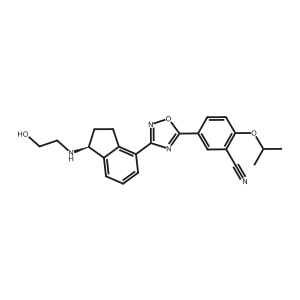
FDA label
Read the full label on DailyMed ↗
| FDA dosing | Population | Start | Target | Max |
|---|---|---|---|---|
| Multiple sclerosis; ulcerative colitis (same regimen) | Adults | Titration: 0.23 mg QD Days 1–4, then 0.46 mg QD Days 5–7 | 0.92 mg QD from Day 8 | 0.92 mg QD |
Titration Mandatory fixed 7-day initiation ramp (dose steps after Day 4 and Day 7); no up-titration beyond 0.92 mg QD
Renal Undefined
Hepatic Mild–moderate (Child-Pugh A/B): 0.92 mg once EVERY OTHER DAY after standard 7-day titration; severe (Child-Pugh C): not recommended
Instructions
- Swallow capsules whole, with or without food
- Before first dose: ECG; CBC with lymphocytes (within 6 months); transaminases/bilirubin; baseline fundus/macula exam; skin exam; VZV antibody test and vaccination if no confirmed history/vaccination
- Review current/prior immunosuppressants and drugs slowing heart rate or AV conduction; consider cardiology consult if conduction abnormalities
- Live attenuated vaccines: give ≥1 month before starting
- Missed dose in first 2 weeks: restart the 7-day titration; after 2 weeks: continue as planned
Available strengths
- cap 0.23, 0.46, 0.92 mg
Contraindications
- MI, unstable angina, stroke, TIA, decompensated heart failure requiring hospitalization, or Class III/IV heart failure in the last 6 months
- Mobitz type II second-degree or third-degree AV block, sick sinus syndrome, or sino-atrial block — unless functioning pacemaker
- Severe untreated sleep apnea
- MAOIs (concurrently; ≥14 days should elapse after stopping ozanimod before starting an MAOI)
Cautions
- Infections: lymphocyte count falls to ~45% of baseline; monitor during and for 3 months after stopping; do not start with active infection; PML — withhold at first suggestive sign; cryptococcal and herpes infections reported
- Bradyarrhythmia/AV conduction delays at initiation — 7-day titration required; baseline ECG
- Liver injury — LFTs before and during; discontinue if unexplained injury
- Fetal risk — effective contraception during and for 3 months after stopping
- Increased blood pressure; respiratory function decline (spirometry if indicated)
- Macular edema — baseline and periodic fundus exams; diabetes and uveitis raise risk
- Cutaneous malignancies — baseline and periodic skin exams
- PRES; unintended additive immunosuppression from prior therapies; severe MS disability increase after stopping; immune effects persist up to 3 months post-discontinuation
Adverse reactions
- MS (≥4%): upper respiratory infection, hepatic transaminase elevation, orthostatic hypotension, urinary tract infection, back pain, hypertension
- UC (≥4%): liver test increased, upper respiratory infection, headache
Pregnancy No adequate human data; embryolethality and malformations in animals at clinically relevant exposures (S1P role in vascular/neural embryogenesis); pregnancy exposure registry available; contraception during and 3 months after
Lactation No human data; ozanimod/metabolites in rat milk above maternal plasma; weigh benefit of breastfeeding vs risk
Cost
| Strength | #/mo | generic $/mo | CostPlus | |
|---|---|---|---|---|
| 0.23 mg | cap | 30 qd | not offered | |
| 0.46 mg | cap | 30 qd | not offered | |
| 0.92 mg | cap | 30 qd | not offered |
NO BOXED WARNINGS
Principal riskBradycardia, macular edema; weak MAO-B inhibitor
Classes and tags
Clinical profile
Legacy pregnancy categoryN/A (post-2015 labeling)
Defining liabilityInfection, hepatic injury, bradycardia and persistent immunosuppression