Nifedipine
PROCARDIA
Pronunciation: nye-FED-i-peen
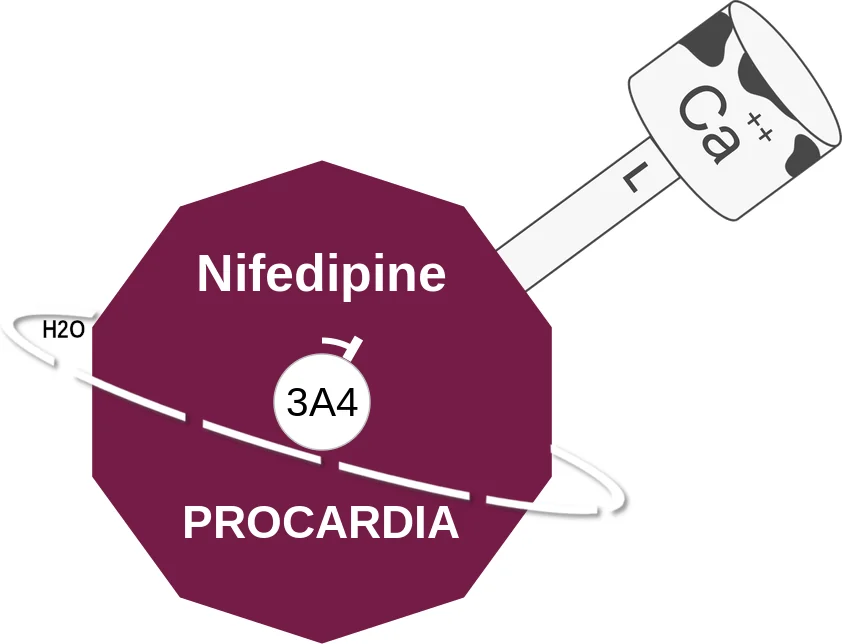
What it isL-type calcium-channel-blocking vasodilator; hypertension, angina, Raynaud phenomenon, and off-label tocolysis.
Why this oneExtended-release nifedipine is a preferred oral antihypertensive in pregnancy and also treats Raynaud vasospasm.
What limits itImmediate-release use can provoke reflex tachycardia and ischemia; edema and CYP3A4 interactions remain common problems.
FDA-approved for
- angina (1981)
- hypertension (~1985)
Off-label
- Raynaud phenomenon
- high-altitude illness
FDA label
Read the full label on DailyMed ↗
| FDA dosing | Population | Start | Target | Max |
|---|---|---|---|---|
| Vasospastic angina; chronic stable angina | Adults | 10 mg TID | 10–20 mg TID | 180 mg/day |
Titration Titrate over 7–14 days (may be faster with frequent assessment; up to 10 mg increments over 4–6 h in hospitalized patients).
Renal Undefined (used safely in renal dysfunction; rare reversible BUN/creatinine elevations in pre-existing insufficiency).
Hepatic Undefined.
A single dose should rarely exceed 30 mg.
Instructions
- Swallow capsule whole
- Avoid grapefruit juice
- If discontinuing, decrease dose gradually
Available strengths
- cap 10, 20 mg
- ER tab 30, 60, 90 mg
Cautions
- Excessive hypotension (especially with beta-blockers)
- Peripheral edema
- Increased angina/MI on initiation or dose increase
- Elevated liver enzymes
Adverse reactions
- Dizziness/lightheadedness
- Flushing/heat sensation
- Headache
- Weakness
- Nausea/heartburn
- Peripheral edema
- Palpitations
Pregnancy Teratogenic/embryotoxic in animals; use only if potential benefit justifies risk.
Lactation Undefined.
Cost
| Strength | #/mo | generic $/mo | CostPlus | |
|---|---|---|---|---|
| 10 mg | cap | 90 TID | $23.10 | offered |
| 20 mg | cap | 90 TID | $61.70 | offered |
Other forms: Nifedipine ER (GITS) (PROCARDIA XL)
Generic entry1990
NO BOXED WARNINGS
Principal riskReflex tachycardia and peripheral edema
Classes and tags
Clinical profile
Legacy pregnancy categoryC
Defining liabilityHypotension and reflex tachycardia; overdose can cause severe vasodilatory shock.
Open Nifedipine in the interactive console ↗
Memory aids: interaction avatars