Nicotine nasal spray
NICOTROL NS
Pronunciation: NIK-oe-teen
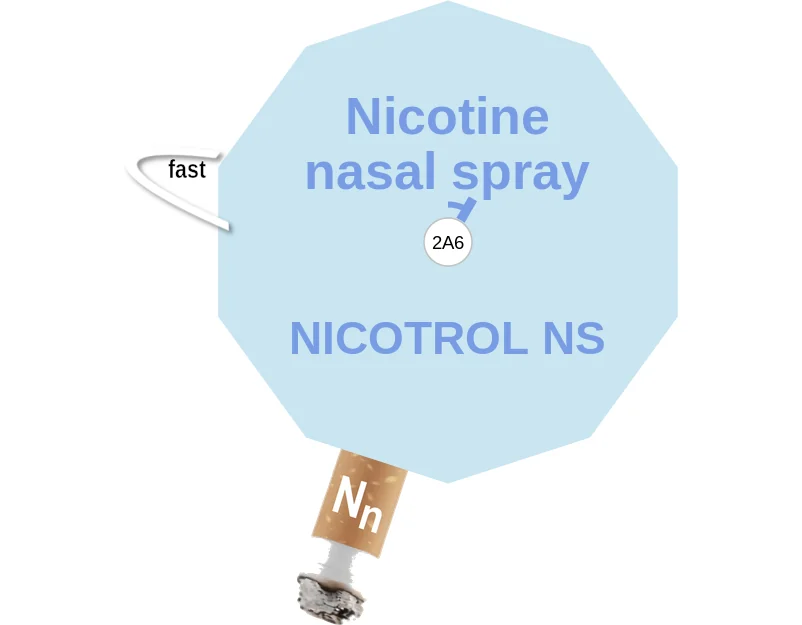
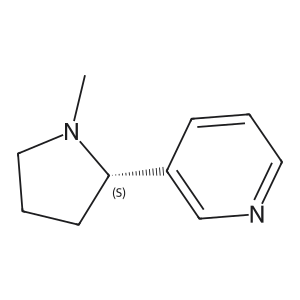
What it isNasal neuronal nicotinic-receptor agonist replacement for smoking cessation; still prescription-only.
Why this oneIt is the fastest-onset nicotine replacement, closest to a cigarette’s nicotine spike, which also gives it the highest dependence potential of the NRT products.
What limits itNasal burning, sneezing, and tearing are intense early; dependence can persist, and reactive airway disease may worsen.
FDA-approved for
- smoking cessation (1996)
FDA label
Read the full label on DailyMed ↗
| FDA dosing | Population | Start | Target | Max |
|---|---|---|---|---|
| Aid to smoking cessation for relief of nicotine withdrawal symptoms (as part of a comprehensive behavioral program) | Adults (not recommended in pediatric population) | 1–2 doses/h; 1 dose = 1 mg = 2 sprays (one per nostril, 0.5 mg/spray); use ≥8 doses/day (less unlikely to be effective) | Individualized; continue selected dose up to 8 wks, then discontinue over next 4–6 wks (recommended max duration 3 months) | 5 doses/h; 40 doses/day (40 mg = 80 sprays, just under 1/2 bottle); not >6 months |
Titration Self-titrate by nicotine dependence and symptoms of nicotine excess vs withdrawal; if not abstinent by week 4, probably discontinue
Renal Consider dose reduction and monitor for nicotine-excess adverse events (nausea, dizziness); clearance decreased ~30% (moderate) and ~50% (severe) renal impairment
Hepatic Consider dose reduction and monitor for nicotine-excess adverse events; total clearance reduced ~40–50% at Child-Pugh 7; unaffected at Child-Pugh 5; no data beyond Child-Pugh 7
Continued use >6 months not recommended (not adequately studied)
Instructions
- Stop smoking completely when starting; use as part of a behavioral cessation program
- Tilt head back slightly; do not sniff, swallow, or inhale through the nose while spraying; avoid spraying eyes
- Regular use in week 1 helps adaptation to irritant effects (nasal irritation in 94% during first 2 days)
- Discontinuation strategies: use 1/2 dose (1 spray) at a time, use less often, keep a daily tally, set a reducing target, skip hourly doses, or set a planned stop date; some may stop abruptly
- Keep used and unused bottles away from children and pets (full bottle = 100 mg nicotine); dispose safely
Available strengths
- nasal spray 0.5 mg/spray (10 mg/mL; 1 dose = 2 sprays)
Contraindications
- Known hypersensitivity or allergy to nicotine or any component of the product
Cautions
- Nicotine from any source is toxic and addictive; weigh NRT risk vs hazard of continued smoking
- Continued smoking during use → peak nicotine levels higher than smoking alone; discontinue if clinically significant cardiovascular effects
- Severe reactive airway disease: use not recommended (bronchospasm exacerbation reported in pre-existing asthma)
- Nasal mucosa irritation; extended use beyond 6 months not recommended
- Cardiovascular/peripheral vascular disease (CHD, serious arrhythmias, vasospastic disease): evaluate carefully; generally avoid in immediate post-MI period, serious arrhythmias, severe or worsening angina
- Renal or hepatic impairment: decreased clearance — consider dose reduction and monitor
- Hyperthyroidism, pheochromocytoma, insulin-dependent diabetes: caution (catecholamine release)
- Esophagitis, active gastric or peptic ulcer: caution (delays ulcer healing)
- Accelerated hypertension: caution (risk factor for malignant hypertension)
- Common cold/rhinitis reduces absorption and delays peak; nasal vasoconstrictors (xylometazoline) further delay peak
- Smoking cessation may require dose decrease of acetaminophen, caffeine, imipramine, oxazepam, pentazocine, propranolol/beta-blockers, theophylline, insulin, prazosin/labetalol; dose increase of adrenergic agonists (isoproterenol, phenylephrine)
- Keep used and unused containers away from children and pets (poisoning can be fatal)
- Elderly: start at low end of dosage range
Adverse reactions
- Nasal irritation 94% (first 2 days; mostly moderate–severe), 81% at 3 weeks (mostly mild–moderate)
- Runny nose, throat irritation, watering eyes, sneezing, coughing (active and placebo)
- More common on active than placebo: nasal congestion, sinus irritation, transient epistaxis, eye irritation, taste/smell changes, pharyngitis, nasal/mouth paresthesia or numbness, burning nose/eyes, earache, facial flushing, hoarseness, nasal ulcer or blister
- Headache 18% (placebo 15%); back pain 6% (4%); dyspnea 5% (6%); nausea 5% (5%); arthralgia 5% (1%); menstrual disorder 4% (4%); palpitation 4% (4%); flatulence 4% (3%); tooth disorder 4% (1%); gum problems 4% (1%); myalgia 3% (4%); abdominal pain 3% (3%); confusion 3% (3%); acne 3% (1%); dysmenorrhea 3% (0%); pruritus 2% (3%)
- Feelings of dependence on the spray and calming drug-like effects more frequent on active spray
- <1%: peripheral edema, dry mouth, hiccup, diarrhea, purpura, aphasia, amnesia, migraine, bronchitis, bronchospasm, rash, abnormal vision
- Post-marketing: dysphagia, chest pain, anaphylactic reaction, seizure
Pregnancy Presumed to cause fetal harm (animal data); not studied in pregnant women; attempt behavioral cessation first; use only if likelihood of cessation justifies risk; spontaneous abortion reported with NRT; not recommended during labor and delivery
Lactation Caution; nicotine passes freely into breast milk (milk:plasma ratio 2.9); milk nicotine expected lower than with smoking; weigh infant exposure vs continued maternal smoking
NO BOXED WARNINGS
Principal riskLocal irritation; vivid dreams with the overnight patch
Classes and tags
Clinical profile
Open Nicotine nasal spray in the interactive console ↗
Memory aids: interaction avatars