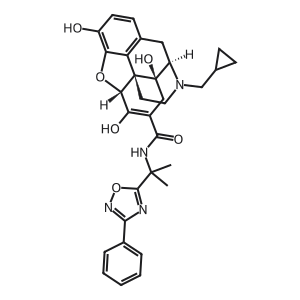
Naldemedine
SYMPROIC
Pronunciation: nal-DEM-e-deen (sim-PROE-ik)
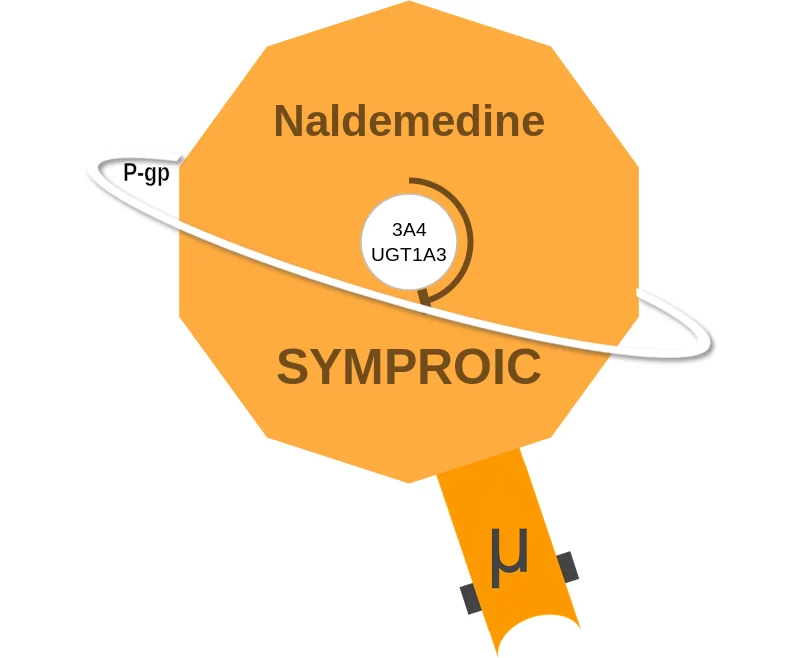
What it isPeripherally restricted mu-opioid antagonist; opioid-induced constipation.
Why this oneOral use without a food restriction distinguishes it from naloxegol while preserving central analgesia.
What limits itGI perforation is the critical risk, so avoid obstruction or structurally vulnerable bowel; CYP3A4 interactions can precipitate withdrawal.
FDA-approved for
- opioid-induced constipation (2017)
FDA label
Read the full label on DailyMed ↗
| FDA dosing | Population | Start | Target | Max |
|---|---|---|---|---|
| Opioid-induced constipation (chronic non-cancer pain) | adult | 0.2 mg QD |
Renal Undefined
Hepatic Avoid in severe hepatic impairment
Instructions
- Take with or without food
- Alteration of the analgesic regimen before starting is not required
- Discontinue if opioid pain medication is discontinued
Available strengths
- tab 0.2 mg
Contraindications
- Known or suspected GI obstruction, or increased risk of recurrent obstruction (GI perforation risk)
Cautions
- Gastrointestinal perforation — monitor for severe/persistent/worsening abdominal pain
- Opioid withdrawal, esp. with disrupted blood-brain barrier
Adverse reactions
- Abdominal pain
- Diarrhea
- Nausea
- Gastroenteritis
- Vomiting
- Opioid withdrawal symptoms
Pregnancy No human data; may precipitate opioid withdrawal in the fetus
Lactation No human data; present in rat milk — risk of opioid withdrawal in breastfed infant; may resume breastfeeding 3 days after final dose
Cost
| Strength | #/mo | generic $/mo | brand $/mo | CostPlus | |
|---|---|---|---|---|---|
| 0.2 mg | tab | 30 qd | — | $487.68 | not offered |
Generic entry2033 est.
NO BOXED WARNINGS
Principal riskGI perforation in advanced illness
Classes and tags
Clinical profile
Legacy pregnancy categoryNot assigned — PLLR-era drug
Defining liabilityDiarrhea, dehydration and electrolyte disturbance, especially with excessive or prolonged use.