Midodrine
PROAMATINE
Pronunciation: MYE-doe-dreen
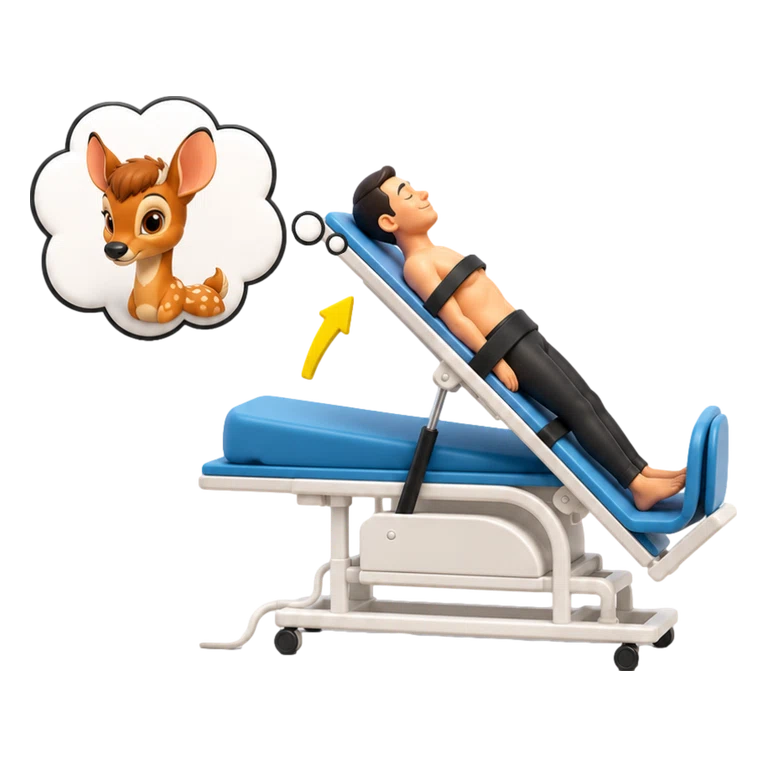
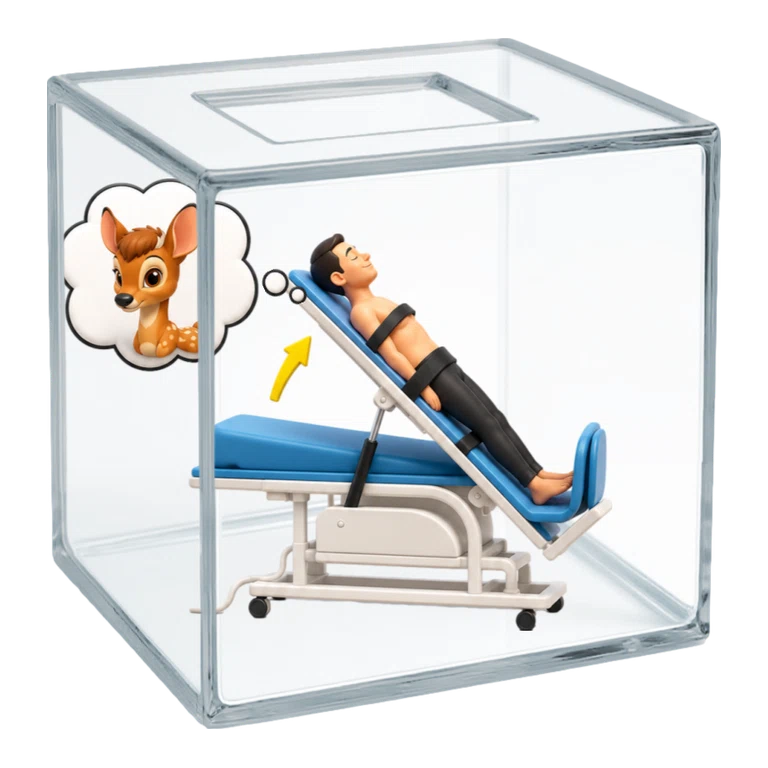
“My doe dream”
a tilt table is used to evaluate orthostatic intolerance and syncope
What it isAlpha-1 agonist prodrug causing peripheral vasoconstriction; symptomatic orthostatic hypotension.
Why this oneOne of the few agents that reliably raises standing blood pressure, and it does not cross into the CNS.
What limits itSupine hypertension is the limiting problem — never dose within four hours of lying down. Scalp tingling and urinary retention.
FDA-approved for
- orthostatic hypotension (1996)
Off-label
- hepatorenal syndrome and cirrhotic ascites
- vasovagal syncope
- intradialytic hypotension
FDA label
Read the full label on DailyMed ↗
| FDA dosing | Population | Start | Target | Max |
|---|---|---|---|---|
| Symptomatic orthostatic hypotension | Adult | 10 mg TID (daytime, ~4 h apart) | 10 mg TID | single doses ≤20 mg studied; >30 mg/day not established |
| Orthostatic hypotension | Renal impairment | 2.5 mg TID |
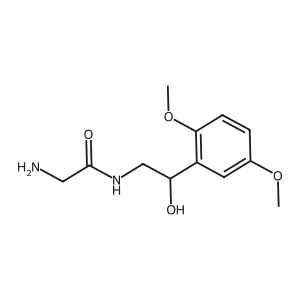
Renal Initiate at 2.5 mg; dose cautiously (desglymidodrine excreted renally)
Hepatic Undefined
Doses may be spaced at 3-h intervals if needed to control symptoms, but not more frequently
Instructions
- Dose during daytime upright hours: on arising, midday, and late afternoon (not later than 6 PM)
- Do not give after the evening meal or <4 h before bedtime (supine hypertension risk)
- Monitor supine and standing BP; stop if supine BP rises excessively; continue only if symptomatic improvement
Available strengths
- tab 2.5, 5, 10 mg
Contraindications
- Severe organic heart disease
- Acute renal disease
- Urinary retention
- Pheochromocytoma
- Thyrotoxicosis
- Persistent and excessive supine hypertension
Cautions
- Supine hypertension (most serious) — monitor supine/standing BP
- Use cautiously in renal impairment
Adverse reactions
- Supine/sitting hypertension
- Paresthesia (incl. scalp)
- Pruritus (mainly scalp)
- Piloerection (goosebumps)
- Chills
- Urinary urgency/retention/frequency, dysuria
- Headache
Pregnancy Undefined
Lactation Undefined
Cost
Generic entry2003
⚠ BOXED WARNING
- Supine hypertension
Classes and tags
Clinical profile
Legacy pregnancy categoryUnknown / historical label unavailable
Defining liabilityGenerally tolerated at therapeutic doses; clinically important risks are agent-specific and increase with interactions or organ impairment.
Active metabolites
Open Midodrine in the interactive console ↗
Memory aids: interaction avatars