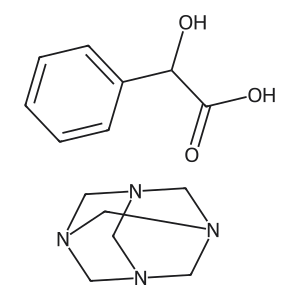
Methenamine mandelate
MANDELAMINE
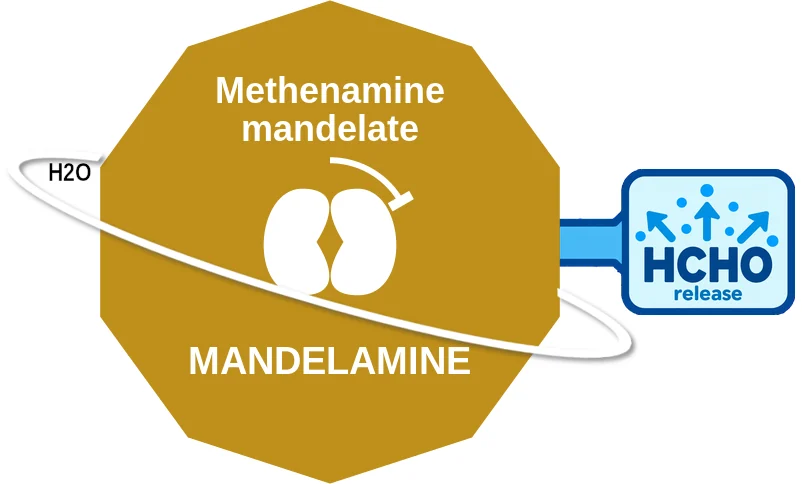
What it isConverted to formaldehyde in acidic urine; recurrent urinary infection prophylaxis.
Why this oneIts mandelic-acid component adds antibacterial action and helps acidify urine beyond formaldehyde release.
What limits itIt works only in acidic urine and is prophylaxis, not treatment; avoid with sulfonamides and carbonic anhydrase inhibitors.
FDA-approved for
- urinary tract infection prophylaxis
FDA label
Read the full label on DailyMed ↗
| FDA dosing | Population | Start | Target | Max |
|---|---|---|---|---|
| UTI — prophylaxis/suppression | Adults | 1 g QID (after each meal and at bedtime) | 4 g/day (1 × 1000 mg tab or 2 × 500 mg tabs QID) | 4 g/day |
| UTI — prophylaxis/suppression | Children 6–12 yr | 500 mg QID (half the adult dose) | 2 g/day | 2 g/day |
Renal Contraindicated in renal insufficiency.
Hepatic Contraindicated in severe hepatic disease.
Instructions
- Take after each meal and at bedtime.
Available strengths
- tab 500, 1000 mg
- sol 500 mg/5 mL
Contraindications
- Renal insufficiency
- Severe hepatic disease
- Severe dehydration
Cautions
- Microscopic and, rarely, gross hematuria have been described with methenamine preparations.
Adverse reactions
- GI disturbance (nausea, stomach upset)
- Generalized skin rash
- Dysuria; painful or difficult urination
- Hematuria — microscopic, rarely gross
Pregnancy Category C — crosses the placenta; use only if potential benefit outweighs risk.
Lactation Undefined
Cost
| Strength | #/mo | generic $/mo | CostPlus | |
|---|---|---|---|---|
| 500 mg | tab | 120 QID | $163.31 | not offered |
| 1000 mg | tab | 120 QID | $312.52 | not offered |
Generic entryPre-1982
NO BOXED WARNINGS
Principal riskIt needs urine pH below 6; prophylaxis only
Classes and tags
Clinical profile
Legacy pregnancy categoryUnknown / historical label unavailable
Defining liabilityGenerally tolerated at therapeutic doses; clinically important risks are agent-specific and increase with interactions or organ impairment.