Liothyronine
CYTOMEL
Pronunciation: lye-oe-THYE-roe-neen
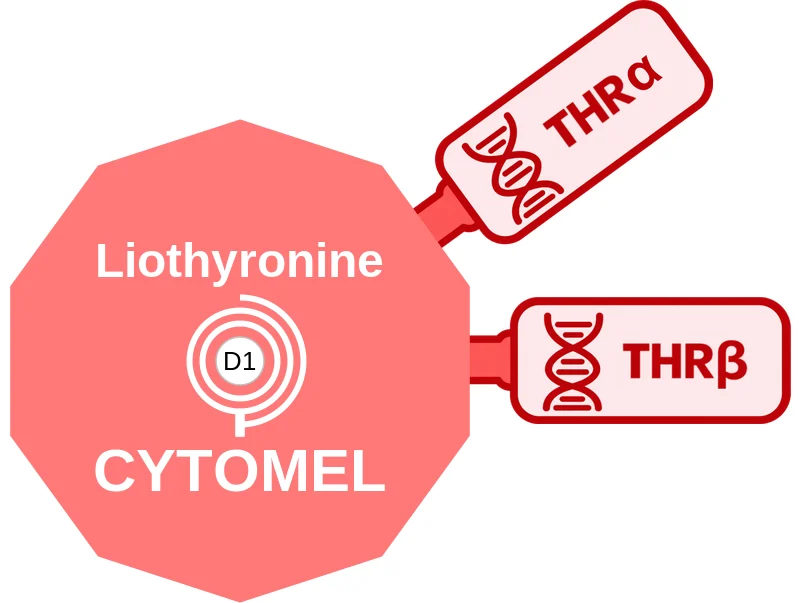
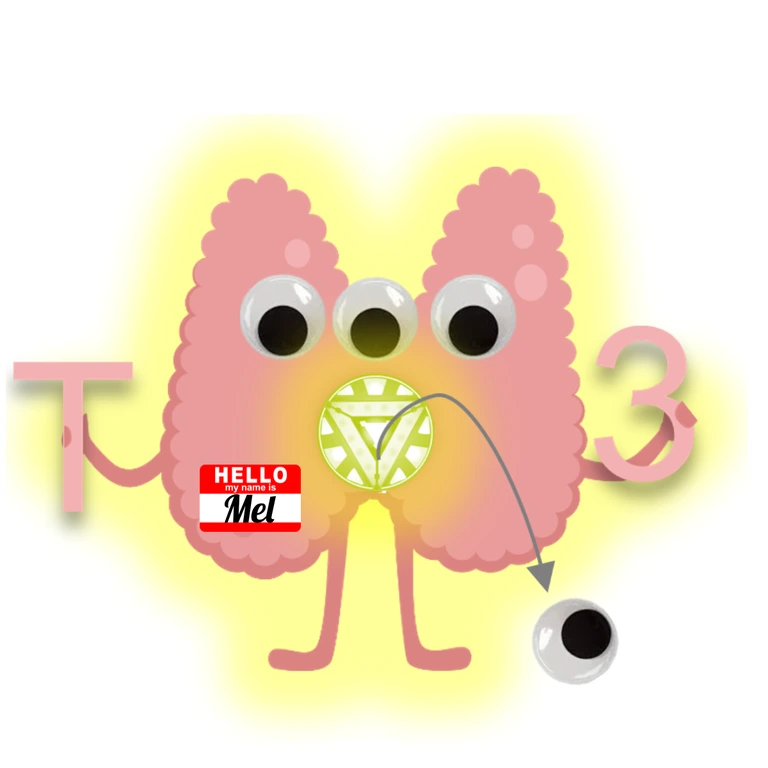
“Excited Mel, Lit thyroid”
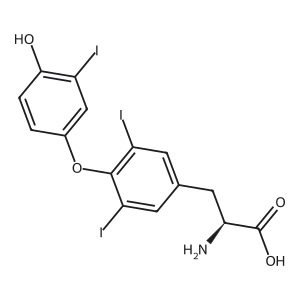
T3 → the “three-eyed” monster (contains 3 iodines)
T4 → T3 = activated by loss of one iodine
What it isThyroid-receptor agonist supplying active T3 directly; hypothyroidism and myxedema coma.
Why this oneIt bypasses T4 conversion and acts quickly, useful in myxedema coma but poorly suited to routine replacement.
What limits itShort action creates peaks and troughs and disproportionate TSH suppression; overtreatment causes arrhythmia and bone loss.
FDA-approved for
- hypothyroidism (~1956)
FDA label
Read the full label on DailyMed ↗
| FDA dosing | Population | Start | Target | Max |
|---|---|---|---|---|
| Hypothyroidism | Adults | 25 mcg QD | 25–75 mcg QD (maintenance) | |
| Hypothyroidism | Elderly or underlying cardiac disease | 5 mcg QD, increase in 5 mcg increments | Titrate to euthyroid | |
| Hypothyroidism | Pediatric | 5 mcg QD (infants ~20 mcg QD; ~50 mcg QD at 1 yr; adult dose >3 yr) | Titrate to euthyroid | |
| Thyroid suppression test | Adults | 75–100 mcg QD for 7 days | ||
| TSH suppression in well-differentiated thyroid cancer | Adults | Dose targeted to desired TSH suppression |
Titration Adults: increase 25 mcg every 1–2 weeks; elderly/cardiac: 5 mcg increments; pediatric: 5 mcg every 3–4 days.
Renal Undefined
Hepatic Undefined
Narrow therapeutic index; rapid onset of action.
Instructions
- Administer orally once daily.
- When switching from levothyroxine: discontinue levothyroxine and start liothyronine at a low dose, titrating up (residual T4 effects persist several weeks).
- Return to pre-pregnancy dose immediately after delivery.
Available strengths
- tab 5, 25, 50 mcg
- inj 0.01 mg/mL
Contraindications
- Uncorrected adrenal (cortical) insufficiency
Cautions
- Cardiac adverse reactions in elderly and cardiovascular disease, incl. atrial fibrillation — start lower dose
- Do not use oral thyroid hormone to treat myxedema coma
- Acute adrenal crisis if adrenal insufficiency — give glucocorticoids first
- Over-/undertreatment harms (narrow therapeutic index)
- May worsen glycemic control in diabetes
- Decreased bone mineral density with over-replacement
Adverse reactions
- Signs of hyperthyroidism from overdose: palpitations, tachycardia, arrhythmias, MI
- Weight loss, increased appetite, heat intolerance, sweating
- Tremor, nervousness, irritability, insomnia, headache
- Diarrhea, vomiting, abdominal cramps
- Pediatric: pseudotumor cerebri, craniosynostosis; hypersensitivity to inactive ingredients
Pregnancy Post-marketing experience reports no increased rate of birth defects/miscarriage; do not discontinue; requirements may increase — monitor and adjust.
Lactation Present in human milk; insufficient information on effects on the breastfed infant.
Cost
Generic entry1982
⚠ BOXED WARNING
- Not for treatment of obesity or weight loss
Classes and tags
Clinical profile
Legacy pregnancy categoryA
Defining liabilityOver-replacement causes atrial fibrillation and bone loss; overdose produces prolonged thyrotoxicosis.
Open Liothyronine in the interactive console ↗
Memory aids: interaction avatars