Levalbuterol
XOPENEX
Pronunciation: lev-al-BYOO-ter-ol
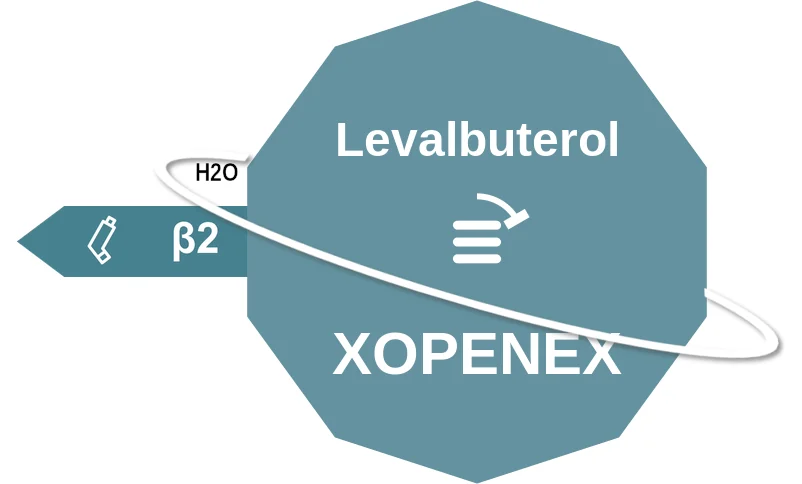
What it isR-enantiomer and beta-2 agonist; rescue treatment of acute bronchospasm.
Why this oneRemoving albuterol's S-enantiomer has not produced a consistent clinical advantage over racemic albuterol.
What limits itTremor, tachycardia, and hypokalemia remain possible; higher cost usually makes albuterol the practical default.
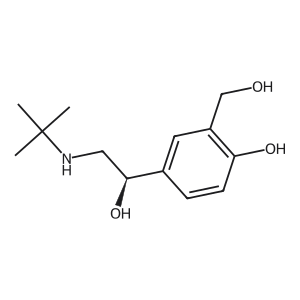
FDA-approved for
- bronchospasm (1999)
FDA label
Read the full label on DailyMed ↗
| FDA dosing | Population | Start | Target | Max |
|---|---|---|---|---|
| Bronchospasm (asthma) | Adults & adolescents ≥12 yr | 0.63 mg TID (q6–8h) | 0.63 mg TID | 1.25 mg TID |
| Bronchospasm (asthma) | Children 6–11 yr | 0.31 mg TID | 0.31 mg TID | 0.63 mg TID |
Renal Use with caution; risk of toxicity may be greater in renal impairment — monitor renal function.
Hepatic Undefined
Instructions
- For oral inhalation only via standard jet nebulizer with mouthpiece/face mask.
- Do not exceed recommended dose.
- Do not mix with other drugs in the nebulizer (compatibility not established).
Available strengths
- sol 0.0103, 0.021, 0.042, 0.25 %
- inhaler 45 mcg/inh
Contraindications
- Hypersensitivity to levalbuterol or racemic albuterol (urticaria, angioedema, anaphylaxis, bronchospasm reported)
Cautions
- Paradoxical bronchospasm — discontinue immediately
- Deterioration of asthma / needing more doses signals destabilization
- Not a substitute for corticosteroids
- Cardiovascular effects (↑HR, BP, QTc); caution in CV disease
- Do not exceed dose — fatalities with excessive use
- Hypokalemia; changes in blood glucose
Adverse reactions
- Palpitations, chest pain, tachycardia
- Headache, dizziness, tremor, nervousness
Pregnancy No adequate controlled studies; no teratogenicity for levalbuterol in rabbits (racemic albuterol teratogenic in animals at high doses).
Lactation No data on presence in human milk.
Cost
| Strength | #/mo | generic $/unit | CostPlus | |
|---|---|---|---|---|
| 0.0103 % | sol | per unit | not offered | |
| 0.021 % | sol | per unit | not offered | |
| 0.042 % | sol | per unit | not offered | |
| 0.25 % | sol | per unit | not offered |
Generic entry2008
NO BOXED WARNINGS
Principal riskNo proven advantage over albuterol at higher cost
Classes and tags
Clinical profile
Legacy pregnancy categoryC
Defining liabilityTremor, tachycardia or anticholinergic effects; excessive beta-agonist exposure can cause hypokalemia and arrhythmia.