Ketoprofen
ORUVAIL
Pronunciation: kee-toe-PROE-fen
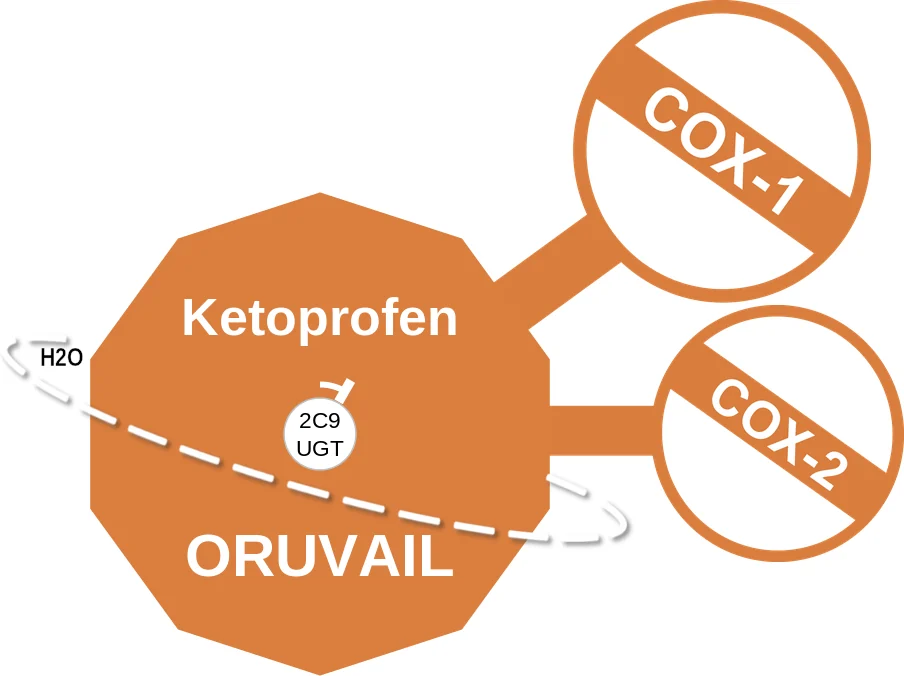

“Key to professor O’Rudy”
“The N said... NSAID”
What it isNon-selective NSAID; arthritis and pain.
Why this onePotent analgesia, and a topical form gives local effect with low systemic exposure.
What limits itStandard NSAID GI, renal and cardiovascular risk. Photosensitivity with the topical form; it raises serum lithium.
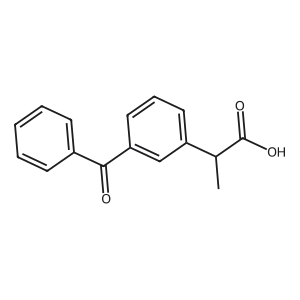
FDA-approved for
- pain (1986)
FDA label
Read the full label on DailyMed ↗
| FDA dosing | Population | Start | Target | Max |
|---|---|---|---|---|
| Rheumatoid arthritis / osteoarthritis (signs and symptoms) | Adults | 200 mg QD | 200 mg QD | 200 mg/day |
Renal Mild impairment: max 150 mg/day; severe (GFR <25 mL/min/1.73 m2) or ESRD: max 100 mg/day; advanced renal disease not recommended
Hepatic Impaired liver function with serum albumin <3.5 g/dL: max initial 100 mg/day
Not recommended for acute pain (extended-release). Reduce initial dose if >75 yr; smaller starting doses in small, debilitated, or elderly patients.
Instructions
- May take with antacids, food, or milk to reduce GI effects
- Use lowest effective dose for shortest duration
Available strengths
- ER cap 200 mg
- cap 25, 50, 75 mg
Contraindications
- Asthma, urticaria, or allergic-type reactions after aspirin or other NSAIDs
- Coronary artery bypass graft (CABG) surgery setting
Cautions
- Cardiovascular thrombotic events (incl. post-MI)
- Hypertension
- Heart failure and edema
- GI ulceration, bleeding, perforation
- Renal effects; advanced renal disease not recommended
- Anaphylactoid reactions
- Serious skin reactions (SJS/TEN, fixed drug eruption)
- DRESS
- Fetal toxicity (ductus closure, oligohydramnios)
Adverse reactions
- Dyspepsia (11%)
- Nausea
- Abdominal pain
- Diarrhea
- Constipation
- Flatulence
- Headache
- CNS inhibition or excitation (somnolence, insomnia, nervousness)
- Impaired renal function (edema, increased BUN)
Pregnancy Avoid at ~30 weeks gestation and later (premature ductus closure); limit dose/duration at ~20–30 weeks (oligohydramnios/neonatal renal impairment).
Lactation Unknown whether excreted in human milk; not recommended in nursing mothers.
Cost
| Strength | #/mo | generic $/mo | CostPlus | |
|---|---|---|---|---|
| 200 mg | ER cap | 90 TID | $581.57 | offered |
Generic entry1992
⚠ BOXED WARNINGS
- Cardiovascular thrombotic events
- Gastrointestinal bleeding, ulceration and perforation
Classes and tags
Clinical profile
Legacy pregnancy categoryMultiple / indication-, trimester- or formulation-dependent
Defining liabilityGI bleeding, kidney injury, hypertension and fluid retention; many agents increase lithium concentrations.
Open Ketoprofen in the interactive console ↗
Memory aids: interaction avatars