Zestoretic
Combination product
Pronunciation: hye-droe-klor-oe-THYE-a-zide and lye-SIN-oe-pril
Combination of Hydrochlorothiazide and Lisinopril.
Each component keeps its own pharmacology page; the combination itself adds no new mechanism.

Micro Hydrant, tie-dyed + Licensed Zest drill
Components (2)
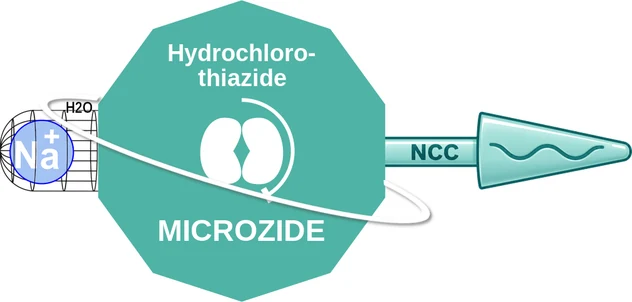
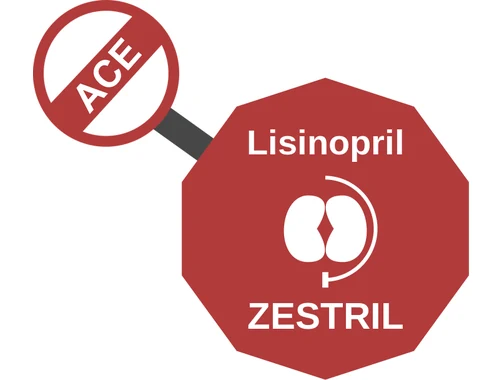
FDA label
Read the full label on DailyMed ↗
| FDA dosing | Population | Start | Target | Max |
|---|---|---|---|---|
| Hypertension — not controlled on lisinopril or HCTZ monotherapy (not for initial therapy) | Adults | 10/12.5 mg or 20/12.5 mg QD | Titrate either component by clinical response | Lisinopril 80 mg + HCTZ 50 mg daily — do not exceed |
| Hypertension — controlled on HCTZ 25 mg QD but with significant potassium loss | Adults | 10/12.5 mg QD (similar/greater BP control, less K+ loss) | 10/12.5 mg QD | Per titration above |
Titration Do not increase HCTZ component until 2-3 weeks have elapsed
Renal CrCl >30 mL/min/1.73m2 (SCr <=~3 mg/dL): no adjustment; more severe impairment: not recommended (loop diuretics preferred over thiazides)
Hepatic No dose adjustment given; use with caution in impaired hepatic function or progressive liver disease - minor fluid/electrolyte shifts may precipitate hepatic coma; discontinue for jaundice or marked hepatic-enzyme elevation
Not for initial therapy of hypertension
Instructions
- Begin combination only after monotherapy failure (minimizes dose-independent side effects)
- May substitute combination for individually titrated components (replacement therapy)
Available strengths
- tab 12.5/10, 12.5/20, 25/20 mg
Contraindications
- History of angioedema with any ACE inhibitor; hereditary or idiopathic angioedema
- Anuria
- Hypersensitivity to other sulfonamide-derived drugs (HCTZ component)
- Coadministration with a neprilysin inhibitor (sacubitril); do not give within 36 h of switching to/from sacubitril/valsartan
- Coadministration with aliskiren in patients with diabetes
Cautions
- Fetal toxicity (boxed) - discontinue as soon as pregnancy is detected
- Head/neck angioedema (face, extremities, lips, tongue, glottis, larynx) can occur at any time, is more frequent in Black patients and has been fatal - discontinue promptly; airway involvement needs subcutaneous epinephrine 1:1000 (0.3-0.5 mL) and airway management
- Intestinal angioedema - consider in patients presenting with abdominal pain on an ACE inhibitor
- Increased angioedema risk with concomitant mTOR inhibitors (temsirolimus, sirolimus, everolimus) or a neprilysin inhibitor
- Life-threatening anaphylactoid reactions during hymenoptera venom desensitization, high-flux membrane dialysis, and LDL apheresis with dextran sulfate
- Excessive hypotension in salt/volume-depleted patients (vigorous diuresis, dialysis); syncope in 0.8% - start under close supervision in severe heart failure, where hypotension may cause oliguria, azotemia, rarely acute renal failure or death; place supine and give IV normal saline if it occurs
- Neutropenia/agranulocytosis and bone marrow depression - consider periodic WBC monitoring in collagen vascular disease and renal disease
- ACE inhibitors rarely cause a syndrome from cholestatic jaundice/hepatitis progressing to fulminant hepatic necrosis - discontinue for jaundice or marked hepatic-enzyme elevation
- Hyperkalemia (K+ >5.7 mEq/L in ~1.4% of patients) - risk with renal insufficiency, diabetes, potassium-sparing diuretics, potassium supplements or salt substitutes; monitor serum potassium
- Persistent nonproductive cough that resolves after discontinuation
- Thiazide caution in severe renal disease (may precipitate azotemia; drug may accumulate) and in impaired hepatic function or progressive liver disease (may precipitate hepatic coma)
- Lithium generally should not be given with thiazides - diuretics reduce lithium clearance and add a high risk of lithium toxicity; monitor serum lithium frequently if used with lisinopril
- Electrolyte imbalance: hypokalemia (blunted by lisinopril), hyponatremia, hypochloremic alkalosis, hypomagnesemia; hypokalemia may cause arrhythmia and sensitize the heart to digitalis toxicity - check serum electrolytes periodically
- Hyperuricemia/gout, hyperglycemia and latent diabetes becoming manifest, raised cholesterol and triglycerides with thiazide therapy
- Acute myopia and secondary angle-closure glaucoma (sulfonamide idiosyncratic reaction, hours to weeks after initiation) - discontinue hydrochlorothiazide as rapidly as possible; untreated it can cause permanent vision loss
- Sensitivity reactions with or without a history of allergy or asthma; possible exacerbation or activation of systemic lupus erythematosus
- Hydrochlorothiazide is associated with increased non-melanoma skin cancer (mainly squamous cell) - protect skin from sun and undergo regular skin cancer screening
- Caution with left ventricular outflow tract obstruction (aortic stenosis/hypertrophic cardiomyopathy); hypotension may occur during major surgery or anesthesia - correct with volume expansion
Adverse reactions
- Most frequent: dizziness (7.5%), headache (5.2%), cough (3.9%), fatigue (3.7%), orthostatic effects (3.2%)
- Also >=1%: diarrhea, nausea, URI, muscle cramps, asthenia, paresthesia, hypotension, vomiting
Pregnancy Boxed - discontinue as soon as pregnancy is detected. Second/third-trimester exposure to RAS-acting drugs reduces fetal renal function and raises fetal/neonatal morbidity and death; oligohydramnios can cause fetal lung hypoplasia and skeletal deformation; neonatal skull hypoplasia, anuria, hypotension, renal failure and death. If no alternative exists, do serial ultrasounds and stop the drug if oligohydramnios appears (unless lifesaving for the mother); observe exposed infants for hypotension, oliguria and hyperkalemia. Thiazides cross the placenta - risk of fetal/neonatal jaundice and thrombocytopenia
Lactation Unknown whether lisinopril is excreted in human milk (present in rat milk); thiazides do appear in human milk - decide whether to discontinue nursing or the drug, considering its importance to the mother
Cost
Part D rank #90.