Etripamil
CARDAMYST
Pronunciation: e-TRIP-a-mil (KAR-da-mist)
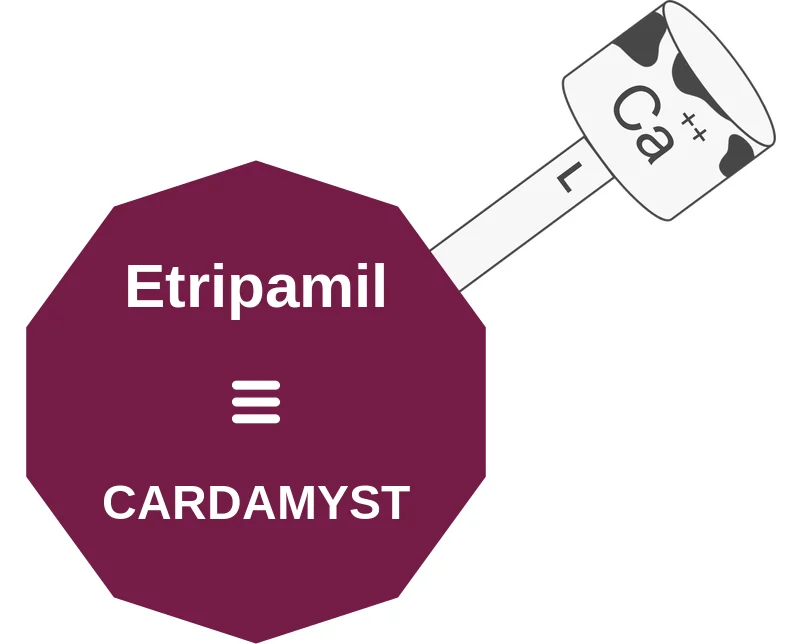
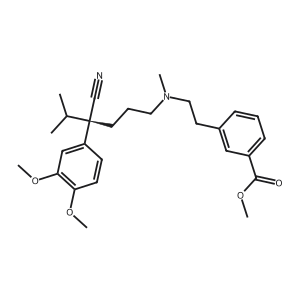
What it isIntranasal L-type calcium-channel blocker that slows AV-nodal conduction; acute symptomatic paroxysmal SVT.
Why this oneIt is the first patient-administered therapy designed to terminate an SVT episode without an IV or emergency visit.
What limits itNasal irritation is common; bradycardia, hypotension, and AV block are the key safety concerns.
FDA-approved for
- paroxysmal supraventricular tachycardia (2025)
FDA label
Read the full label on DailyMed ↗
| FDA dosing | Population | Start | Target | Max |
|---|---|---|---|---|
| Paroxysmal supraventricular tachycardia (PSVT) | adults | 70 mg intranasal (one spray each nostril) at symptom onset | 70 mg intranasal PRN | 140 mg intranasal / 24 h |
Renal Undefined
Hepatic Undefined
Do not exceed 140 mg in 24 h; wait 10 min before repeat dose
Instructions
- Intranasal use only; administer as soon as possible after PSVT symptom onset, one spray into each nostril (70 mg total)
- Administer in a sitting position where fall risk is minimal
- If symptoms persist after 10 min, give a second 70 mg dose (one spray each nostril)
- Seek emergency help if symptoms do not improve within 20 min after the second dose
- If a full initial dose is not delivered (device malfunction/misuse), wait at least 10 min before a second dose
Available strengths
- nasal spray 70 mg
Contraindications
- Heart failure — NYHA Class II to IV
- Wolff-Parkinson-White (WPW), Lown-Ganong-Levine (LGL) syndromes, or manifest pre-excitation (delta wave) on 12-lead ECG
- Sick sinus syndrome without a permanent pacemaker
- Second degree AV Mobitz 2 block or higher degree of AV block
Cautions
- Syncope/dizziness from hemodynamic effects (BP, HR, cardiac conduction) — administer in a sitting position; monitor patients at risk for hemodynamic instability
Adverse reactions
- Nasal discomfort
- Nasal congestion
- Rhinorrhea
- Throat irritation
- Epistaxis
Pregnancy No human data; animal (IV) studies showed no clear fetal harm at exposures near/above MRHD
Lactation No data on etripamil in milk; interrupt breastfeeding and pump and discard milk for 12 h after a dose
Cost
| Strength | #/mo | generic $/unit | brand $/unit | CostPlus | |
|---|---|---|---|---|---|
| 70 mg | nasal spray | per unit | — | $790.10/ea | not offered |
NO BOXED WARNINGS
Principal riskSyncope from hypotension
Classes and tags
Clinical profile
Legacy pregnancy categoryN/A (post-2015 labeling)
Defining liabilityHypotension, syncope and atrioventricular conduction slowing