Etonogestrel implant
NEXPLANON
Pronunciation: e-toe-noe-JES-trel
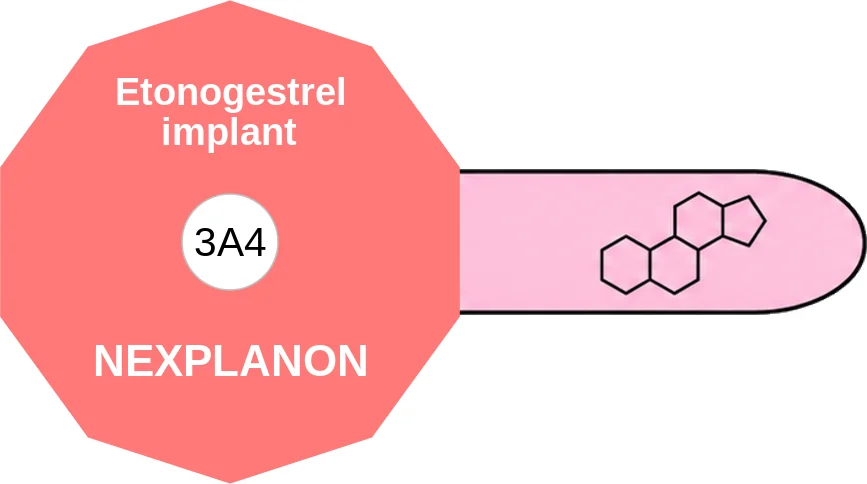
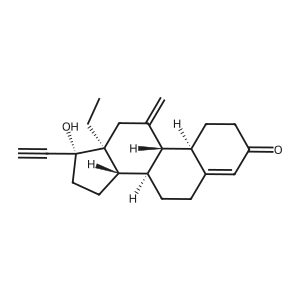
What it isSubdermal progestin agonist that suppresses ovulation and thickens cervical mucus; long-acting contraception.
Why this oneIt removes daily adherence and fertility returns promptly after removal, without estrogen-related thrombosis risk.
What limits itUnpredictable bleeding is the chief reason for removal; insertion can injure nerves or vessels, and enzyme inducers reduce efficacy.
FDA label
Read the full label on DailyMed ↗
| FDA dosing | Population | Start | Target | Max |
|---|---|---|---|---|
| Prevention of pregnancy for up to 5 years | Women of reproductive potential | Insert one implant subdermally at inner side of non-dominant upper arm | Remove no later than the end of the fifth year; may replace at removal |
Renal Undefined
Hepatic Undefined
Efficacy does not depend on daily/weekly/monthly administration; must be removed by end of the fifth year.
Instructions
- Insert subdermally just under the skin at the inner non-dominant upper arm by a trained provider; confirm by palpation immediately after insertion
- Rule out pregnancy before insertion; timing depends on prior contraceptive use
- Remove/replace by end of fifth year; locate non-palpable implants by imaging before removal
Available strengths
- implant 68 mg/implant
- inj 68 mg
Contraindications
- Known or suspected pregnancy
- Current or past history of thrombosis or thromboembolic disorders
- Liver tumors, benign or malignant, or active liver disease
- Undiagnosed abnormal uterine bleeding
- Known or suspected breast cancer, personal history of breast cancer, or other progestin-sensitive cancer, now or in the past
Cautions
- Insertion/removal complications — pain, paresthesia, migration (including to pulmonary vessels); may require surgical removal
- Changes in menstrual bleeding patterns
- Ectopic pregnancy possibility
- Thrombotic and other vascular events — remove if thrombosis occurs
- Liver disease — remove if jaundice occurs
- Elevated blood pressure; carbohydrate/lipid metabolic effects; ovarian cysts
- Breast cancer and reproductive-organ carcinoma
Adverse reactions
- Change in menstrual bleeding pattern
- Headache, vaginitis
- Weight increase, acne
- Breast pain, abdominal pain, pharyngitis
- Emotional lability, depression (discontinuation-related)
Pregnancy Contraindicated in pregnancy; remove the implant if pregnancy is to be maintained.
Lactation Small amounts of etonogestrel present in milk; can reduce milk production; no significant adverse effects observed in breastfed infants.
Cost
| Strength | #/mo | generic $/unit | CostPlus | |
|---|---|---|---|---|
| 68 mg/implant | implant | per unit | not offered |
Other forms: Etonogestrel (NEXPLANON)
Available combined with: ethinyl / estradiol / etonogestrel
⚠ BOXED WARNING
- Complications due to improper insertion and removal
Classes and tags
Clinical profile
Defining liabilityBleeding-pattern changes and insertion/removal complications