Loestrin / Microgestin
Combination product
Pronunciation: ETH-i-nil es-tra-DYE-oel and nor-eth-IN-droen
Combination of Ethinyl estradiol and Norethindrone.
Each component keeps its own pharmacology page; the combination itself adds no new mechanism.

Vinyl estradiol + Nora, F’n drone
Components (2)
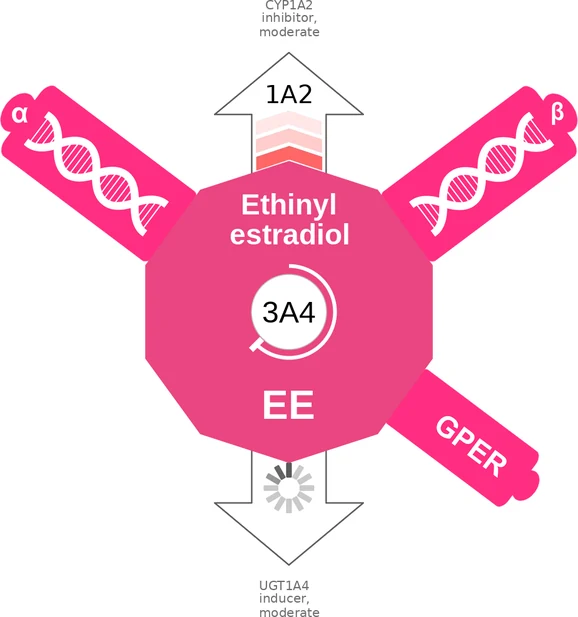
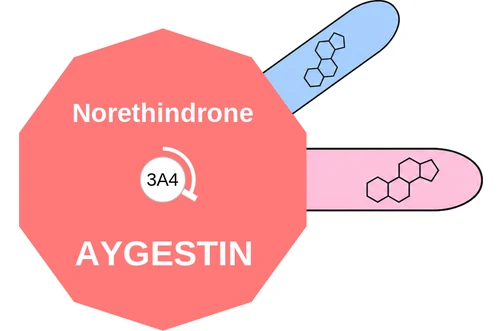
FDA label
Read the full label on DailyMed ↗
| FDA dosing | Population | Start | Target | Max |
|---|---|---|---|---|
| Prevention of pregnancy - ALYACEN 1/35 (monophasic 28-day regimen) | Women of reproductive age | 1 active tablet QD x21 days, then 1 light-green reminder tablet QD x7 days (Sunday Start or Day 1 Start) | 1 tablet QD continuously; start next 28-tablet pack the day after finishing | 1 tablet QD |
| Prevention of pregnancy - ALYACEN 7/7/7 (triphasic 28-day regimen) | Women of reproductive age | 1 active tablet QD x21 days (three 7-day phases), then 1 light-green reminder tablet QD x7 days (Sunday Start or Day 1 Start) | 1 tablet QD continuously; start next 28-tablet pack the day after finishing | 1 tablet QD |
Renal Undefined
Hepatic Discontinue if jaundice develops; steroid hormones may be poorly metabolized in impaired liver function (contraindicated in acute/chronic hepatocellular disease with abnormal liver function)
Interval between tablets must not exceed 24 hours
Instructions
- Take at intervals not exceeding 24 hours; efficacy depends on strict schedule adherence
- Sunday Start, first cycle: use backup contraception (condom/spermicide) through the first 7 consecutive days
- Missed 1 active tablet (week 1, 2 or 3): take it as soon as remembered
- Missed 2 active tablets in week 1 or 2: take 2 tablets that day and 2 the next day, then 1 QD to end of pack; backup contraception x7 days
- Missed 2 active tablets in week 3, or >=3 active tablets in a row: Sunday Start - continue 1 tablet daily until Sunday, then discard pack and start a new pack that day; Day 1 Start - discard pack and start a new pack that day; backup contraception x7 days
- May be started 4 weeks postpartum in women who elect not to breastfeed (postpartum thromboembolic risk)
- Postpubertal adolescents: safety and efficacy expected to be the same as in adults; not indicated before menarche
- Rule out pregnancy after two consecutive missed periods (or after the first missed period if tablets were not taken on schedule)
Available strengths
- tab 1/0.02, 1.5/0.03 mg
Contraindications
- Thrombophlebitis or thromboembolic disorders, current or past (incl. deep vein thrombophlebitis); known thrombophilic conditions
- Cerebral vascular or coronary artery disease (current or history)
- Valvular heart disease with complications
- Persistent BP >=160 mmHg systolic or >=100 mmHg diastolic
- Diabetes with vascular involvement
- Headaches with focal neurological symptoms
- Major surgery with prolonged immobilization
- Known or suspected carcinoma of the breast
- Endometrial carcinoma or other known/suspected estrogen-dependent neoplasia
- Undiagnosed abnormal genital bleeding
- Cholestatic jaundice of pregnancy or jaundice with prior pill use
- Acute or chronic hepatocellular disease with abnormal liver function; hepatic adenomas or carcinomas
- Known or suspected pregnancy
- Hepatitis C regimens containing ombitasvir/paritaprevir/ritonavir, with or without dasabuvir (ALT elevations)
- Women over 35 years who smoke (WARNINGS: combination oral contraceptives should not be used)
Cautions
- Cigarette smoking increases risk of serious cardiovascular events from COC use, rising with age (esp. >35 y) and cigarettes/day - do not use in women >35 who smoke
- Increased risk of MI, thromboembolism (VTE risk highest in first year of use and on restarting after a break >=4 weeks), stroke, hepatic neoplasia and gallbladder disease
- Discontinue >=4 weeks before and 2 weeks after elective surgery with thromboembolic risk and during prolonged immobilization; start no earlier than 4 weeks postpartum
- Do not start hormonal contraception in women with significant hypertension; discontinue if persistent BP >=160/100 mmHg cannot be controlled; monitor BP throughout therapy
- Discontinue for unexplained partial/complete vision loss, proptosis, diplopia, papilledema or retinal vascular lesions (retinal thrombosis)
- Discontinue for new-onset or worsening migraine, or new recurrent/persistent/severe headache
- Discontinue and evaluate for jaundice; ALT elevations with concomitant HCV ombitasvir/paritaprevir/ritonavir regimens
- Decreased glucose tolerance and hypertriglyceridemia - monitor prediabetic/diabetic patients and those treated for hyperlipidemia
- Breakthrough bleeding/spotting, especially in the first 3 months - rule out malignancy or pregnancy
- Ectopic as well as intrauterine pregnancy may occur in contraceptive failures
- Fluid retention; observe women with a history of depression and discontinue if depression recurs seriously
- Does not protect against HIV or other sexually transmitted diseases
Adverse reactions
- Serious (increased risk): thrombophlebitis/venous thrombosis +/- embolism, arterial thromboembolism, pulmonary embolism, MI, cerebral hemorrhage/thrombosis, hypertension, gallbladder disease, hepatic adenomas/benign liver tumors
- Nausea, vomiting, GI symptoms (abdominal cramps, bloating)
- Breakthrough bleeding, spotting, change in menstrual flow, amenorrhea, temporary infertility after discontinuation
- Breast tenderness/enlargement/secretion, edema, weight change, melasma (may persist)
- Cholestatic jaundice, migraine, mental depression, reduced carbohydrate tolerance, vaginal candidiasis
- Allergic reaction incl. rash, urticaria, angioedema; corneal steepening and contact-lens intolerance
- Diminution in lactation when given immediately postpartum
Pregnancy Pregnancy Category X - contraindicated in known or suspected pregnancy; discontinue if pregnancy is confirmed. Epidemiologic studies show no increased risk of birth defects from use before or inadvertently during early pregnancy
Lactation Small amounts of contraceptive steroids appear in milk; jaundice and breast enlargement reported in infants. Combined OCs in the postpartum period may reduce quantity and quality of breast milk - if possible use another method until completely weaned
Cost
Part D rank #73.