Elagolix
ORILISSA
Pronunciation: el-a-GOE-lix
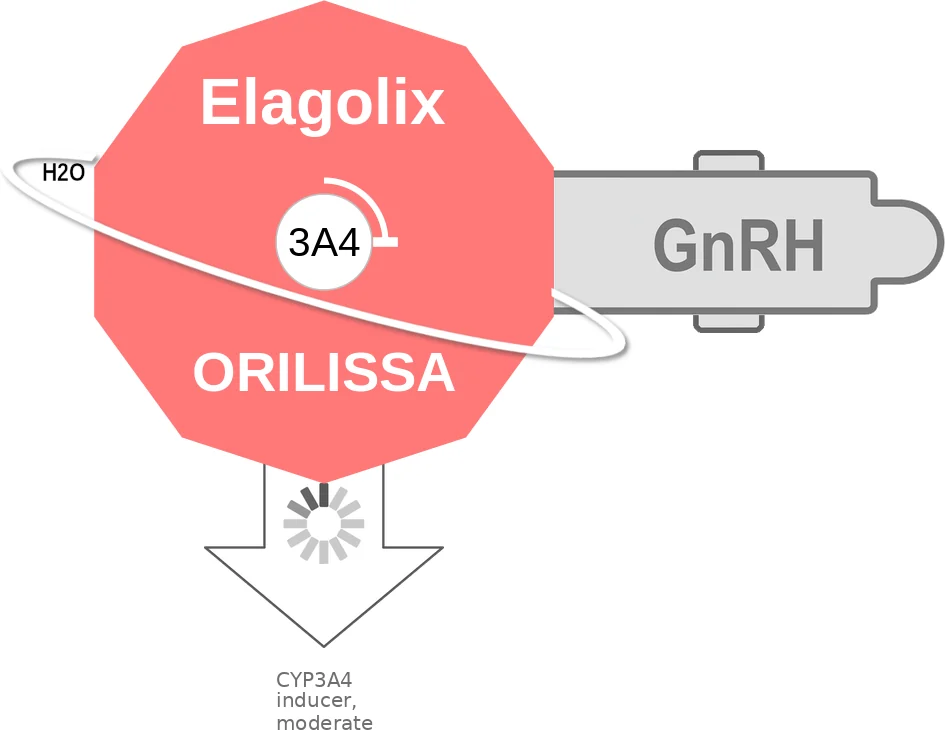
What it isOral GnRH receptor antagonist; moderate-to-severe endometriosis pain.
Why this oneIt suppresses immediately without the agonist flare of leuprolide, and suppression can be titrated.
What limits itHypoestrogenic bone loss limits treatment duration. Monitor hepatic injury and CYP3A4 interactions.
FDA-approved for
- moderate-to-severe endometriosis pain (2018)
FDA label
Read the full label on DailyMed ↗
| FDA dosing | Population | Start | Target | Max |
|---|---|---|---|---|
| Moderate to severe endometriosis pain | Normal liver function or mild hepatic impairment | 150 mg QD | 150 mg QD (up to 24 mo) | 200 mg BID (up to 6 mo; consider for dyspareunia) |
| Moderate to severe endometriosis pain | Moderate hepatic impairment (Child-Pugh B) | 150 mg QD | 150 mg QD | 150 mg QD (up to 6 mo); 200 mg BID not recommended |
Renal No adjustment needed (any degree of renal impairment, incl. ESRD/dialysis)
Hepatic Mild: no adjustment; moderate (Child-Pugh B): 150 mg QD, max 6 mo; severe: contraindicated
Instructions
- Take at approximately the same time each day, with or without food.
- Exclude pregnancy before starting or start within 7 days of menses onset.
- Use lowest effective dose; limit duration of use because of bone loss.
Available strengths
- tab 150, 200 mg
Contraindications
- Pregnancy
- Known osteoporosis
- Severe hepatic impairment
- Concomitant OATP1B1 inhibitors that significantly increase elagolix plasma concentrations
Cautions
- Dose- and duration-dependent bone mineral density loss (may not be fully reversible)
- Altered menstrual bleeding may reduce ability to recognize pregnancy
- Suicidal ideation and mood disorders
- Dose-dependent hepatic transaminase elevations
- Interactions with hormonal contraceptives — use non-hormonal contraception
Adverse reactions
- Hot flushes/night sweats
- Headache
- Nausea
- Insomnia
- Amenorrhea
- Anxiety
- Arthralgia
- Depression-related reactions and mood changes
Pregnancy Contraindicated; early exposure may increase risk of early pregnancy loss.
Lactation No human data on presence in milk; weigh benefits against clinical need.
Cost
| Strength | #/mo | generic $/mo | brand $/mo | CostPlus | |
|---|---|---|---|---|---|
| 150 mg | tab | 30 qd | — | $1,314.26 | not offered |
| 200 mg | tab | 30 qd | — | $657.95 | not offered |
Generic entry2040 est.
NO BOXED WARNINGS
Principal riskHypoestrogenic bone loss capping duration
Classes and tags
Clinical profile
Legacy pregnancy categoryNot assigned — PLLR-era drug
Defining liabilityGenerally tolerated at therapeutic doses; clinically important risks are agent-specific and increase with interactions or organ impairment.