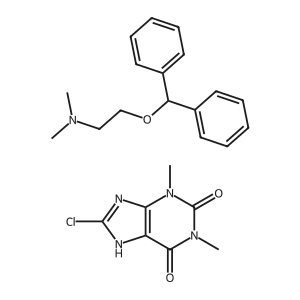
Dimenhydrinate
DRAMAMINE
Pronunciation: dye-men-HYE-dri-nayt
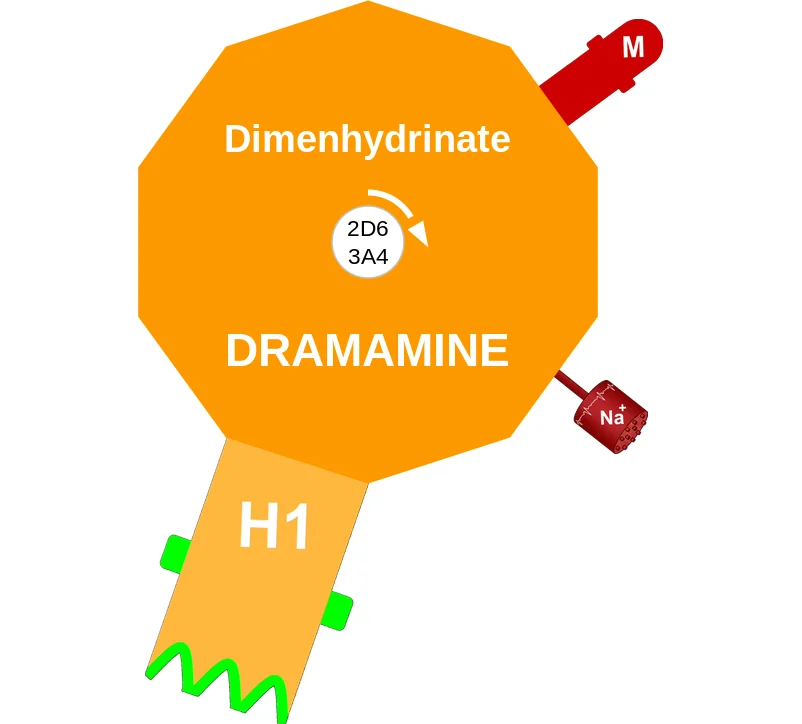

“Diamond hydrant in the Drama mine”
crimson → anticholinergic “red as a beet
mad as a hatter” → BBB-crossing antimuscarinic
What it isSedating H1 and muscarinic antagonist formulated with a stimulant counter-ion; motion sickness and vestibular nausea.
Why this oneIt treats vestibular nausea, which 5-HT3 antagonists do not.
What limits itAnticholinergic burden and sedation limit use. Prolonged treatment suppresses vestibular compensation and delays recovery.
FDA-approved for
- motion sickness / nausea
Off-label
- acute vestibular vertigo
FDA label
Read the full label on DailyMed ↗
| FDA dosing | Population | Start | Target | Max |
|---|---|---|---|---|
| Prevention/treatment of motion sickness | Adults & children ≥12 y | 1–2 tablets q4–6h | 1–2 tablets q4–6h | 8 tablets/24h |
| Prevention/treatment of motion sickness | Children 6 to <12 y | ½–1 tablet q6–8h | ½–1 tablet q6–8h | 3 tablets/24h |
| Prevention/treatment of motion sickness | Children 2 to <6 y | ½ tablet q6–8h | ½ tablet q6–8h | 1½ tablets/24h |
Renal Undefined
Hepatic Undefined
Do not exceed the age-specific 24-hour maximum.
Instructions
- To prevent motion sickness, take the first dose ½ to 1 hour before starting activity
- Do not take more than directed
- Children under 2 years: do not use except under advice of a doctor
Available strengths
- tab 25, 50 mg
- cap 50 mg
- chew tab 15, 25, 50 mg
- sol 15 mg/5 mL
- inj 50 mg/mL
Pregnancy Undefined
Lactation Undefined
Cost
Dimenhydrinate (DRAMAMINE)
What pharmacies pay · NADAC 9/30/26 · OTC
| Strength | #/mo | generic $/unit | CostPlus | |
|---|---|---|---|---|
| 25 mg | tab | per unit | not offered | |
| 50 mg | tab | per unit | $0.06/ea | not offered |
NO BOXED WARNINGS
Principal riskAnticholinergic burden and sedation
Classes and tags
Clinical profile
Defining liabilityMarked sedation and antimuscarinic toxicity