Delafloxacin
BAXDELA
Pronunciation: del-a-FLOX-a-sin (bax-DE-la)
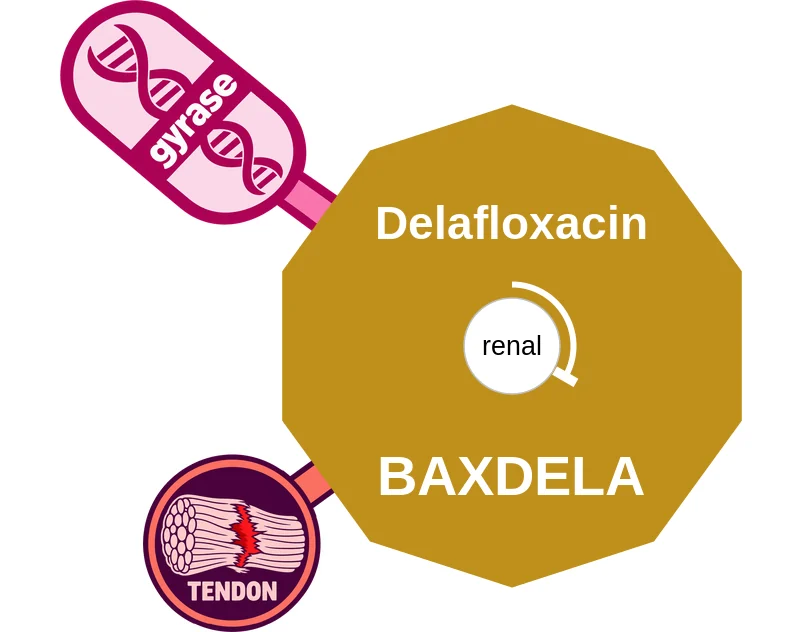
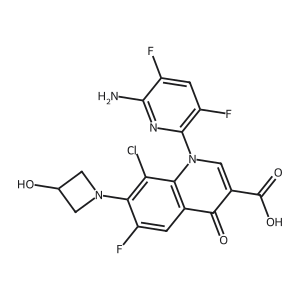
What it isAn anionic fluoroquinolone that inhibits bacterial DNA gyrase and topoisomerase IV, with enhanced activity in acidic environments.
Why this oneCovers MRSA in addition to gram-negatives and atypicals, and is used for acute bacterial skin and skin-structure infections and community-acquired bacterial pneumonia.
What limits itAs a fluoroquinolone it carries class risks of tendinitis/tendon rupture, peripheral neuropathy, CNS effects, and myasthenia gravis exacerbation, and should be reserved for patients lacking alternatives.
FDA label
Read the full label on DailyMed ↗
| FDA dosing | Population | Start | Target | Max |
|---|---|---|---|---|
| Acute bacterial skin and skin structure infections (ABSSSI) | Adults | 450 mg PO q12h, or 300 mg IV q12h (60-min infusion; may switch to 450 mg PO q12h) | Same, 5-14 days total | 450 mg PO / 300 mg IV q12h |
| Community-acquired bacterial pneumonia (CABP) | Adults | 450 mg PO q12h, or 300 mg IV q12h (may switch to 450 mg PO q12h) | Same, 5-10 days total | 450 mg PO / 300 mg IV q12h |
Renal eGFR 30-89: no adjustment. eGFR 15-29: IV 200 mg q12h (oral 450 mg q12h unchanged); monitor SCr/eGFR closely on IV (SBECD vehicle accumulates), consider switch to oral. ESRD (eGFR <15, incl. hemodialysis): not recommended; discontinue if eGFR falls <15
Hepatic No adjustment needed
Severe renal impairment: IV dose reduced to 200 mg q12h while oral stays 450 mg q12h
Instructions
- Tablets: with or without food
- Take tablets at least 2 h before or 6 h after antacids containing Mg/Al, sucralfate, metal cations (iron), multivitamins with zinc/iron, or didanosine buffered forms
- IV: infuse over 60 min; do not co-infuse with other medications or solutions containing multivalent cations (Ca, Mg) through the same line
- Missed oral dose: take up to 8 h before next scheduled dose; if <8 h remain, skip
Available strengths
- tab 450 mg
- inj 300 mg
Contraindications
- Known hypersensitivity to delafloxacin or any fluoroquinolone-class antibacterial
Cautions
- Tendinitis/tendon rupture (any age; higher risk >60 yr, corticosteroids, transplant): discontinue at first sign of tendon pain
- Peripheral neuropathy, possibly irreversible: discontinue immediately if symptoms
- CNS effects incl. psychiatric reactions, and exacerbation of myasthenia gravis (avoid with known history)
- Serious, occasionally fatal hypersensitivity reactions — discontinue at first sign of rash
- C. difficile-associated diarrhea
- Aortic aneurysm and dissection risk (epidemiologic)
- Blood glucose disturbances (hypo/hyperglycemia)
Adverse reactions
- >=2%: nausea, diarrhea, headache, transaminase elevations, vomiting
Pregnancy Limited human data insufficient to inform risk; no malformations or fetal death in rats up to ~7x clinical exposure
Lactation No human milk data; excreted in rat milk — weigh benefits of breastfeeding against maternal need and infant risk
Cost
| Strength | #/mo | generic $ | CostPlus | |
|---|---|---|---|---|
| 450 mg | tab | 60 BID | not offered | |
| 300 mg | inj | per unit | not offered |
⚠ BOXED WARNINGS
- Tendinitis and tendon rupture
- Peripheral neuropathy
- Central nervous system effects
- Exacerbation of myasthenia gravis
Principal riskBoxed warning: fluoroquinolone-class risks of tendinitis/tendon rupture, peripheral neuropathy, CNS effects, and exacerbation of myasthenia gravis.