Chlorhexidine
PERIDEX
Pronunciation: klor-HEX-i-deen
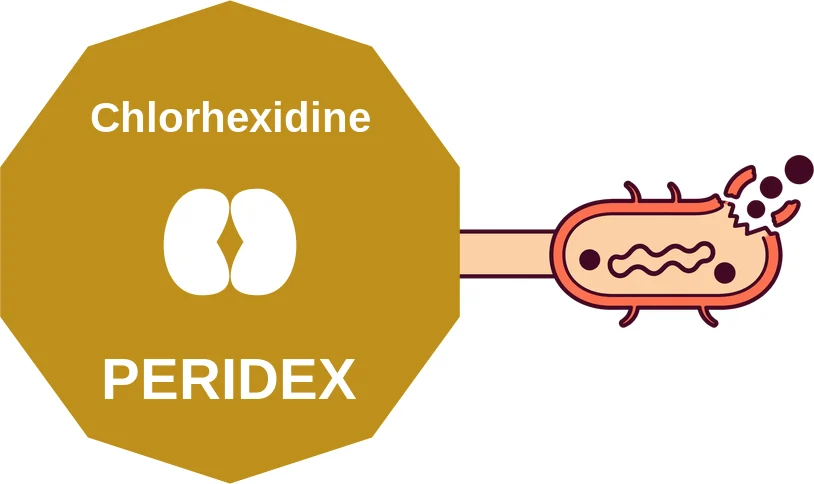
What it isCationic antiseptic that disrupts bacterial membranes; surgical skin preparation and gingivitis rinses.
Why this oneIt binds skin and oral surfaces for residual activity after application, unlike alcohol alone.
What limits itNever use it in the eye, ear or meninges; rare anaphylaxis occurs, and oral use stains teeth and alters taste.
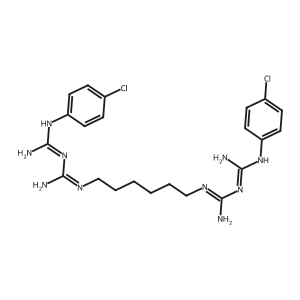
FDA label
Read the full label on DailyMed ↗
| FDA dosing | Population | Start | Target | Max |
|---|---|---|---|---|
| Oral rinse therapy (initiated directly after dental prophylaxis) | Adults | 15 mL (1 tbsp) undiluted, swish 30 sec BID (morning and evening, after tooth brushing), then expectorate | Same | 15 mL BID |
Renal Undefined
Hepatic Undefined
Instructions
- Initiate directly following a dental prophylaxis; re-evaluate with thorough prophylaxis at intervals no longer than 6 months
- Do not rinse with water or other mouthwashes, brush teeth, or eat immediately after use
- Not for ingestion — expectorate after rinsing
Available strengths
- sol 0.12, 0.5, 0.75, 2, 4 %
- inhaler 4 %
- rinse 1.2 mg/mL
- sponge 4 %
- swab 2 %
Cautions
- Increased staining of teeth and other oral surfaces
- Increased calculus formation
- Alteration in taste perception
Adverse reactions
- Tooth/oral surface staining, increased calculus, taste alteration (most common)
- Oral irritation, local allergy-type symptoms
- Oral mucosal effects (<1%): aphthous ulcer, gingivitis, ulceration, erythema, desquamation, coated/geographic tongue, keratinization, mucocele
- Postmarketing: stomatitis, glossitis, dry mouth, hypesthesia, glossal edema, paresthesia; parotid gland swelling and sialadenitis
Pregnancy Category B — animal studies (rats/rabbits) showed no fetal harm; no adequate human studies; use only if clearly needed
Lactation Undefined
Cost
Chlorhexidine (PERIDEX)
| Strength | #/mo | generic $/unit | CostPlus | |
|---|---|---|---|---|
| 0.12 % | sol | per unit | not offered | |
| 0.5 % | sol | per unit | not offered | |
| 0.75 % | sol | per unit | not offered | |
| 2 % | sol | per unit | not offered | |
| 4 % | sol | per unit | not offered |
NADAC is a voluntary CMS survey of what retail community pharmacies pay for the drugs they stock. Chlorhexidine is dispensed outside retail pharmacies, so it rarely appears on surveyed invoices.
NO BOXED WARNINGS
Principal riskStaining of teeth, restorations and tongue