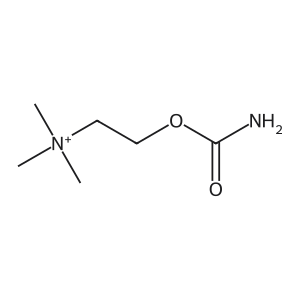
Carbachol
MIOSTAT
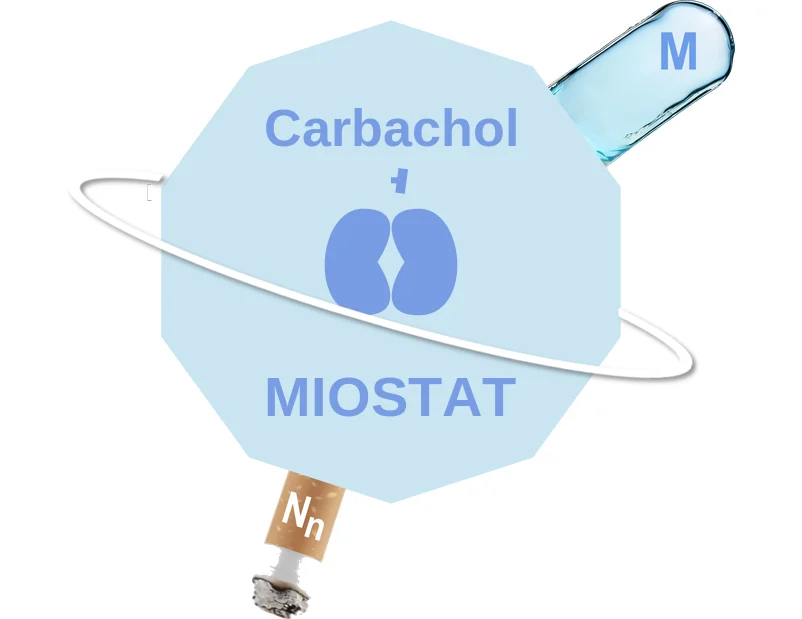
What it isNon-selective cholinergic agonist resistant to cholinesterase; intraoperative miosis and glaucoma.
Why this oneIts resistance to hydrolysis gives a longer effect than acetylcholine in the eye.
What limits itSystemic absorption can cause sweating and abdominal cramps; use cautiously in patients with asthma, acute heart failure, or urinary obstruction.
FDA-approved for
- miosis (ophthalmic surgery)
- glaucoma
FDA label
Read the full label on DailyMed ↗
| FDA dosing | Population | Start | Target | Max |
|---|---|---|---|---|
| Miosis during ocular surgery; reduces IOP elevation in first 24 h after cataract surgery | Adults | No more than 0.5 mL gently instilled into anterior chamber, single intraoperative dose | Single dose (miosis maximal within 2-5 min) | 0.5 mL |
Renal Undefined
Hepatic Undefined
Instructions
- Single-dose intraocular use only; discard unused portion
- Withdraw into dry sterile syringe; replace needle with atraumatic cannula before instillation
- May be instilled before or after securing sutures
Available strengths
- sol 0.01 %
Cautions
- Use with caution in acute cardiac failure, bronchial asthma, peptic ulcer, hyperthyroidism, GI spasm, urinary tract obstruction, and Parkinson disease
- Vial stopper contains natural rubber latex - severe allergic reactions possible
Adverse reactions
- Corneal clouding/edema
- Persistent bullous keratopathy
- Retinal detachment
- Postoperative iritis/eye inflammation
- Prolonged miosis
- Eye pain
- Increased IOP
- Blurred vision/visual impairment
- Systemic (topical/systemic carbachol): flushing, sweating, epigastric distress, abdominal cramps, urinary bladder tightness, headache
Pregnancy No adequate well-controlled studies; use only if potential benefit justifies fetal risk
Lactation Unknown whether excreted in breast milk; exercise caution in nursing women
Cost
| Strength | #/mo | generic $/unit | CostPlus | |
|---|---|---|---|---|
| 0.01 % | sol | per unit | not offered |
NO BOXED WARNINGS
Principal riskNicotinic as well as muscarinic activity, so systemic absorption causes broad cholinergic effect