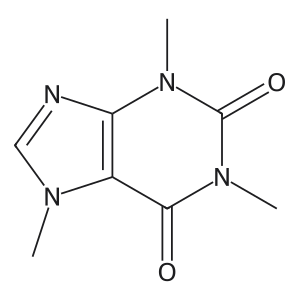
Caffeine
CAFCIT
Pronunciation: KAF-een
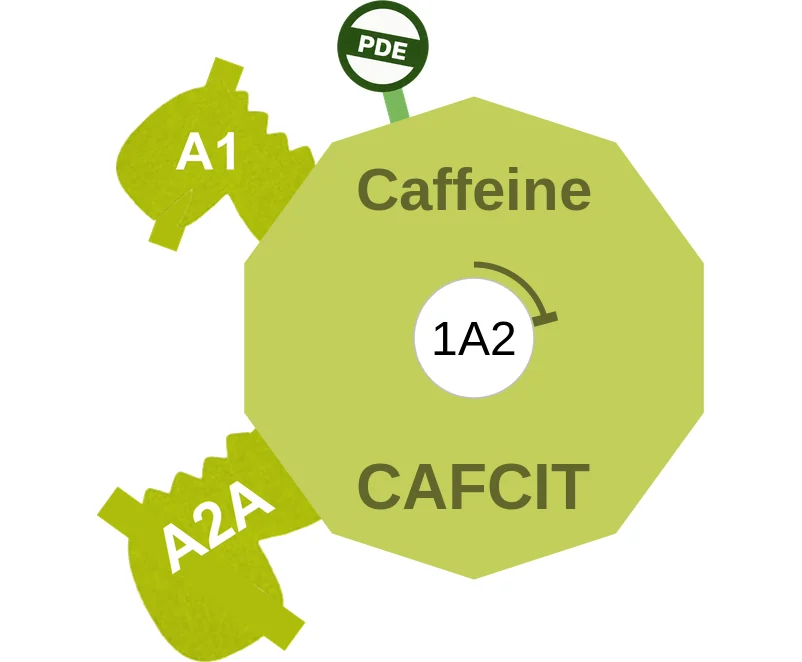

“A dino sign (adenosine) antagonist”
What it isAdenosine receptor antagonist; alertness, analgesic adjunct, and apnea of prematurity.
Why this oneIn neonates it reduces apnea and improves neurodevelopmental outcome, which is a genuine therapeutic use rather than a stimulant one.
What limits itTolerance and withdrawal headache. A CYP1A2 substrate, so fluvoxamine and ciprofloxacin raise levels sharply, and smoking lowers them.
FDA-approved for
- apnea of prematurity (~1999)
Off-label
- post-dural-puncture headache
FDA label
Read the full label on DailyMed ↗
| FDA dosing | Population | Start | Target | Max |
|---|---|---|---|---|
| Apnea of prematurity | Preterm infants | Load 20 mg/kg (1 mL/kg) IV over 30 min, once | Maintenance 5 mg/kg (0.25 mL/kg) IV over 10 min or PO q24h, starting 24 h after load | Undefined (serious toxicity with serum levels >50 mg/L) |
Renal Undefined
Hepatic Undefined
Measure baseline caffeine level if infant previously on theophylline or mother consumed caffeine before delivery; monitor levels periodically.
Instructions
- Doses expressed as caffeine citrate (20 mg citrate = 10 mg caffeine base)
- IV via syringe infusion pump: load over 30 min, maintenance over 10 min
- Inspect for particulates/discoloration; single-dose vial — discard unused portion
- Stable 24 h at room temp admixed with D5W, D50W, Intralipid 20%, Aminosyn 8.5%, dopamine, calcium gluconate, heparin, fentanyl
Available strengths
- sol 30 mg/3 mL
- inj 20, 125 mg/mL
- tab 100, 200 mg
- cream 6 g/100 mL
- gel 1 g/108.27 g
- paste 0.05 g/100 mL
Cautions
- Necrotizing enterocolitis — monitor
Adverse reactions
- Feeding intolerance (8.7%)
- Rash (8.7%)
- Sepsis (4.3%)
- Necrotizing enterocolitis (4.3%)
- CNS stimulation (irritability, jitteriness) — literature
- Tachycardia — literature
- Hypo-/hyperglycemia — literature
- Increased gastric aspirate/GI intolerance — literature
Pregnancy Pregnancy Category C; teratogenicity not relevant to infant use; cleft palate/exencephaly in mice.
Cost
| Strength | #/mo | generic $/unit | CostPlus | |
|---|---|---|---|---|
| 30 mg/3 mL | sol | per unit | not offered | |
| 20 mg/mL | inj | per unit | not offered | |
| 125 mg/mL | inj | per unit | not offered |
Available combined with: butalbital / acetaminophen / caffeine
NO BOXED WARNINGS
Principal riskWithdrawal headache; CYP1A2 interactions
Classes and tags
Clinical profile
Legacy pregnancy categoryC
Defining liabilityNeonatal accumulation and dosing-related tachycardia or seizures
Open Caffeine in the interactive console ↗
Memory aids: interaction avatars